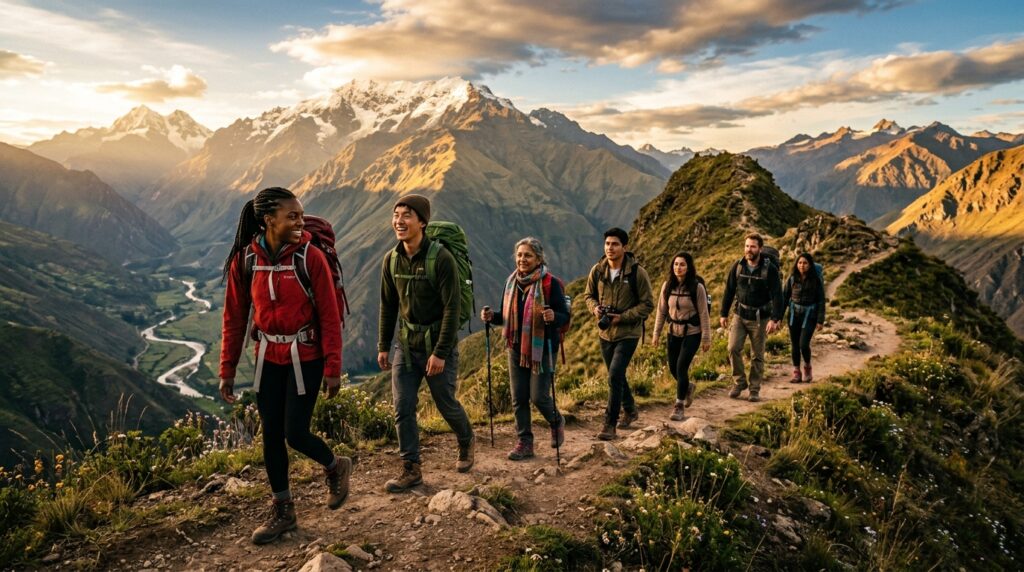
Travel can be exciting long before the journey begins. Choosing a destination, discovering places to visit, comparing accommodation, planning meals, and imagining new experiences are all part of the adventure. But successful travel also requires practical decisions.
The best journeys usually combine preparation with flexibility. Travelers need enough information to avoid preventable problems without creating an itinerary so rigid that there is no room for discovery.
Whether you are traveling internationally, taking a family vacation, exploring a new city, or planning a longer adventure, a few thoughtful habits can make the entire experience more rewarding.
- Find Inspiration Without Copying Someone Else’s Trip
- Turn Online Ideas Into Practical Plans
- Slow Down Enough to Experience a Destination
- Make Food Part of the Journey
- Organize Your Research Before Departure
- Protect Cards, Cash, and Important Documents
- Bring Something to Read
- Research Local Dishes Before Ordering
- Travel With a Creative Eye
- Do Not Choose Destinations Only Because They Are Trending
- Think About Environmental Impact
- Decide What Is Worth Spending More On
- Use Personal Stories for Inspiration
- Learn the Background of What You See
- Understand Political Context When It Affects Travel
- Use Reviews to Identify Patterns
- Plan According to Who Is Traveling
- Make Family Travel Less Complicated
- Plan Evening Transportation Before Going Out
- Use Travel as an Opportunity for Young People to Learn
- Respect Regional Culture
- Prepare Carefully for Island Destinations
- Develop Better Media Literacy Before Traveling
- Check International Developments Before Departure
- Choose Accommodation for Convenience, Not Just Appearance
- Pack Less and Choose More Versatile Items
- Keep Essential Items in Carry-On Luggage
- Download Offline Maps
- Learn How Public Transportation Works
- Leave Enough Time Between Connections
- Keep an Emergency Reserve
- Do Not Schedule Every Minute
- Wake Up Early Occasionally
- Try Local Food Without Turning Every Meal Into Research
- Learn a Few Useful Local Words
- Respect Photography Rules
- Protect Your Sleep
- Keep a Small Travel Journal
- Accept That Some Things Will Go Wrong
- Travel With Curiosity Rather Than Expectations
- Meaningful Travel Is About More Than Distance
- Make the Journey Yours
Find Inspiration Without Copying Someone Else’s Trip
Travel ideas can appear almost anywhere online. An interesting photograph, personal story, article, or discussion may introduce you to somewhere you had never considered.
During general browsing, travelers may encounter independent resources such as Air Demon, lifestyle-oriented sites such as Bebe Gogo, or general-interest resources such as Clue Bees.
Use these discoveries as starting points. Your final itinerary should still reflect your own interests, available time, physical comfort, and budget.
Turn Online Ideas Into Practical Plans
Finding an interesting destination is easy. Determining whether it works for your trip requires deeper research.
Broad online exploration may lead travelers to resources such as Lavi Post and question-oriented resources such as Answer Prime Hub.
Once a destination catches your attention, investigate flight availability, accommodation costs, weather, transportation, entry requirements, and the amount of time required to enjoy it properly.
Slow Down Enough to Experience a Destination
Trying to visit too many places during one trip can turn travel into a continuous sequence of check-ins, checkouts, stations, and airports.
Travelers looking for quieter reading and different perspectives may encounter sites such as The Silent Chief, while entrepreneurial and lifestyle browsing may lead to resources such as Venture Cake.
Consider spending longer in fewer destinations. An extra day can provide enough time to explore neighborhoods, revisit a favorite restaurant, or simply enjoy a morning without rushing.
Make Food Part of the Journey
Food is one of the most accessible ways to experience local culture. Ingredients, cooking techniques, meal times, and regional specialties often reveal something about a destination’s history and environment.
General browsing may lead food-curious travelers to resources such as Bajiroo, Hot Klix, or Hun Baba.
Instead of eating exclusively around major attractions, explore neighborhood bakeries, markets, cafés, and restaurants where appropriate.
Organize Your Research Before Departure
Travel planning becomes inefficient when useful information is scattered across browser tabs, screenshots, emails, and messaging apps.
While researching online, travelers may encounter broad web resources such as Regated, Blitz Source, and Front Side Rocks.
Create a single travel document containing the information that matters: reservations, addresses, transportation instructions, attraction times, emergency contacts, and important booking references.
Protect Cards, Cash, and Important Documents
Financial preparation deserves attention before international travel. Understand how your cards work abroad, what fees may apply, and whether cash is commonly required at the destination.
During broader online research, travelers may encounter resources such as Kard Block, alongside general-interest sites such as Mr Serome and Crioceras.
Avoid keeping every payment method in the same place. A separately stored backup card can be useful if a wallet is lost or a primary card stops working.
Bring Something to Read
Airports, long flights, train journeys, and quiet evenings provide excellent opportunities to read.
Travelers searching for reading material may encounter resources such as Free Book 1, while wider online exploration may lead to sites such as Provedor Crescenet.
Download books and other entertainment before departure so they remain available without internet access.
Research Local Dishes Before Ordering
Learning about regional food before arriving makes restaurant menus easier to understand and can encourage travelers to try dishes they might otherwise overlook.
Food-related browsing may introduce travelers to recipe resources such as Resep Nastar.
If you have allergies or dietary restrictions, learn the relevant words in the local language and keep a translated explanation available.
Travel With a Creative Eye
Creative travelers often experience destinations differently. Photographers notice light and architecture, writers observe conversations and small details, while designers may focus on signs, interiors, colors, and public spaces.
Creative exploration online can lead to resources such as I Am Thomas Jullien, Oh It’s Just Perfect, and Rubitsky.
Try dedicating part of a day to exploring without a checklist. Observe details you would normally pass without noticing.
Do Not Choose Destinations Only Because They Are Trending
Social media can transform previously quiet destinations into highly popular locations almost overnight.
People following online trends may encounter resources such as Trend Far, while entertainment and internet-culture browsing might surface sites such as Internet Chicks Worth and Maza Point.
A trending destination may still be excellent, but ask whether it matches your interests before spending money to visit it.
Think About Environmental Impact
Travel inevitably consumes resources, but thoughtful decisions can reduce unnecessary impact.
People researching environmental measurements and related subjects may encounter resources such as My SQM Club.
Using public transportation when practical, reducing disposable waste, respecting protected areas, and spending longer in destinations rather than repeatedly making short trips are reasonable considerations.
Decide What Is Worth Spending More On
Travel budgets are personal. One traveler may prioritize an excellent hotel, while another prefers basic accommodation and spends more on restaurants or activities.
People curious about financial profiles and value-related subjects may encounter resources such as Netly Worth.
Instead of trying to minimize every expense, identify the experiences that matter most and allocate more of the budget toward them.
Use Personal Stories for Inspiration
Individual perspectives can reveal details that large destination guides sometimes miss. Personal stories can introduce neighborhoods, routines, viewpoints, and experiences that feel more intimate.
Travelers exploring individual voices online may encounter resources such as Lorano Carter, Maliamano Cherian, and Matthew Bourne.
Remember that another person’s perfect itinerary may not suit your pace, interests, or budget.
Learn the Background of What You See
A cathedral, fortress, monument, neighborhood, or traditional celebration becomes more meaningful when you understand its history.
Travelers searching for background and reference information may encounter resources such as The Encarta.
You do not need to study a destination academically. Even twenty minutes of background reading can significantly improve the experience of visiting an important historical place.
Understand Political Context When It Affects Travel
Political developments can occasionally influence demonstrations, transportation, border procedures, or public events.
Travelers researching political subjects may encounter resources such as Fantasy Congress, New Politics, and Wall St South.
When political developments could affect personal safety or entry requirements, rely on current official advisories and authoritative local information.
Use Reviews to Identify Patterns
Reviews are especially valuable for accommodation, tours, transportation services, and attractions. However, individual reviews can be unusually positive or negative.
Travelers comparing products and services may encounter review-oriented resources such as Product Review, deal-focused sites such as Shaft Deals, and comparison resources such as Top Best One and Top Tens Best.
Look for repeated themes across recent reviews. If many unrelated visitors describe the same advantage or problem, it deserves greater attention.
Plan According to Who Is Traveling
The ideal itinerary changes depending on whether you are traveling alone, with a partner, with friends, or as a family.
Women researching lifestyle perspectives may encounter resources such as A Woman’s Views, while parents balancing travel with work and family life may come across Mama Hustle Repeat. Broader women’s lifestyle browsing may also lead to Uniquely Women.
Build the itinerary around the actual travelers rather than using a generic schedule designed for everyone.
Make Family Travel Less Complicated
Traveling with children requires additional flexibility. Meals, bathroom stops, rest, entertainment, and unexpected changes can consume more time than expected.
Parents exploring family-oriented content may encounter resources such as Family Fella.
A simpler itinerary with fewer major activities can often produce a happier family trip than attempting to maximize every day.
Plan Evening Transportation Before Going Out
Nightlife, restaurants, concerts, and evening attractions can be memorable parts of travel, but returning to accommodation should be considered before the evening begins.
Travelers interested in after-hours lifestyle topics may encounter resources such as Past My Curfew.
Check when public transportation stops operating and understand which licensed taxi or ride-hailing options are available.
Use Travel as an Opportunity for Young People to Learn
Travel can make geography, history, languages, and cultural differences much more tangible for younger travelers.
People interested in youth, learning, and exploration themes may encounter resources such as Where the Young Learn to Fly.
When traveling with children or teenagers, involve them in planning. Allow them to choose an attraction, restaurant, or activity so they feel connected to the journey.
Respect Regional Culture
Every destination has its own customs and social expectations. Travelers should understand basic etiquette rather than assuming familiar behavior is appropriate everywhere.
During regional research, readers may encounter resources such as Al Thai, while broader international exploration may lead to sites such as K10 World.
Pay particular attention to expectations surrounding religious locations, clothing, photography, greetings, and public behavior.
Prepare Carefully for Island Destinations
Island trips can require different logistics from mainland travel. Flights and ferries may operate on limited schedules, weather can disrupt transportation, and some goods can be more expensive because they are imported.
Travelers exploring island-related subjects may encounter Hawaii-oriented resources such as Shun Art Hawaii.
If the itinerary involves several islands, confirm transportation before reserving accommodation that depends on a particular connection.
Develop Better Media Literacy Before Traveling
Travel decisions are increasingly influenced by online articles, social platforms, videos, reviews, and breaking news. Knowing how to evaluate information is therefore a practical travel skill.
People exploring media and communication topics may encounter resources such as BBC World Service Trust.
Check when information was published, identify whether a source is reporting facts or expressing an opinion, and seek primary information when the decision involves visas, transportation, health requirements, or personal safety.
Check International Developments Before Departure
International travelers should perform one final information check shortly before leaving.
Those searching for global developments may encounter broad resources such as Newsline World.
Then verify the practical essentials directly: flight status, passport validity, visa or entry requirements, accommodation reservations, transportation arrangements, weather, and any official advisories relevant to the destination.
Choose Accommodation for Convenience, Not Just Appearance
A beautiful hotel can still be inconvenient if it is far from the areas you plan to explore.
Before booking, check walking distances and nearby transportation. Look at how long it will actually take to reach major activities rather than relying on descriptions such as “centrally located.”
A practical location can save hours over the course of a trip.
Pack Less and Choose More Versatile Items
Heavy luggage makes airports, railway stations, stairs, hotel changes, and public transportation more difficult.
Choose clothing that can be combined in several ways and pack according to the activities actually planned.
Check the weather shortly before leaving and avoid packing large numbers of items for unlikely scenarios.
Keep Essential Items in Carry-On Luggage
Important documents, medication, electronics, chargers, valuables, and essential personal items should remain accessible during transportation whenever practical.
If checked luggage is delayed, having basic necessities with you can make the first day much easier.
Download Offline Maps
Internet access may disappear when you need directions most.
Download maps for important cities or regions before departure. Save your accommodation, airport or station, and important attractions.
Offline navigation can be particularly useful immediately after arriving in another country before mobile connectivity has been arranged.
Learn How Public Transportation Works
Efficient public transportation can significantly reduce the cost of exploring a city.
Research whether visitors should purchase individual tickets, daily passes, stored-value cards, or mobile tickets. Check whether services continue late at night and whether different transport operators use separate payment systems.
Leave Enough Time Between Connections
Tight connections can turn small delays into major travel problems.
When planning separate flights, trains, buses, or ferries, consider how much time is realistically needed to collect luggage, change terminals, complete border procedures, or reach another station.
Extra connection time may feel inefficient when everything runs perfectly, but it becomes valuable when something goes wrong.
Keep an Emergency Reserve
A travel budget should include money that is not allocated to ordinary daily spending.
Unexpected transportation, replacement items, additional accommodation, or itinerary changes can occur even during carefully planned trips.
A separate reserve provides flexibility without immediately disrupting the rest of the budget.
Do Not Schedule Every Minute
One of the easiest ways to make travel stressful is to create a timetable with no breathing room.
Meals take longer than expected. Attractions have queues. Interesting streets invite exploration. Sometimes you simply need to sit down.
Choose priorities for each day and treat everything else as optional.
Wake Up Early Occasionally
Popular attractions can feel completely different early in the morning. Streets may be quieter, temperatures can be more comfortable, and photography conditions may improve.
You do not need to wake up early every day of a vacation, but doing it for one or two particularly popular places can be worthwhile.
Try Local Food Without Turning Every Meal Into Research
Restaurant research is useful, but planning every meal months in advance can remove spontaneity.
Reserve restaurants that genuinely require advance booking, then leave other meals flexible enough to follow recommendations or discover something while walking.
Learn a Few Useful Local Words
A small vocabulary can make everyday interactions easier.
Learn greetings, thank you, excuse me, numbers, and simple words related to food or transportation. Translation applications can handle more complicated situations, but basic phrases reduce dependence on a phone.
Respect Photography Rules
Not every beautiful place should be photographed. Religious buildings, museums, performances, government facilities, and private spaces may have restrictions.
Follow posted rules and ask permission before photographing individuals closely, particularly in situations where visitors could easily make someone uncomfortable.
Protect Your Sleep
Travelers sometimes sacrifice sleep because they want to maximize every hour of a trip.
However, continuous exhaustion can reduce enjoyment and make ordinary inconveniences feel much worse.
A well-rested traveler often experiences fewer attractions more meaningfully than an exhausted traveler rushing through a larger number.
Keep a Small Travel Journal
Photos capture appearance, but a journal captures thoughts, conversations, surprises, and emotions.
Write only a few sentences each evening if a traditional diary feels like too much work. Record the best meal, funniest moment, biggest surprise, and one thing you learned.
Those notes can become remarkably valuable years later.
Accept That Some Things Will Go Wrong
No amount of preparation can guarantee a perfect trip. Flights can be delayed, weather can change, restaurants can disappoint, and attractions can close.
The ability to adapt is one of the most useful travel skills. A problem does not have to become the defining memory of the journey.
Travel With Curiosity Rather Than Expectations
Online photographs and videos can create a highly polished image of a destination before you arrive.
Real places are more complicated. They have traffic, ordinary neighborhoods, changing weather, crowds, construction, and everyday life alongside the beautiful locations that attract visitors.
Approaching a destination with curiosity allows you to appreciate what it actually is rather than constantly comparing it with an idealized version.
Meaningful Travel Is About More Than Distance
You do not need to cross half the world to have an interesting travel experience. A nearby city, rural area, historical town, national park, or unfamiliar neighborhood can provide the same sense of discovery.
The essential ingredient is attention. Notice what is different. Learn something about the place. Try local food. Speak with people respectfully. Explore beyond what you already know.
Make the Journey Yours
There is no universal formula for a perfect trip. Some people enjoy packed itineraries and famous landmarks. Others prefer quiet mornings, local cafés, long walks, and spontaneous discoveries.
Use travel advice as a framework rather than a set of rules. Prepare the essentials, understand your destination, protect your money and documents, organize transportation, and make informed decisions.
Then leave enough freedom to change your mind.
The journeys people remember most are often not the ones where every detail happened according to plan. They are the ones that combined preparation with discovery, allowing travelers to feel confident enough to explore and flexible enough to enjoy the unexpected.