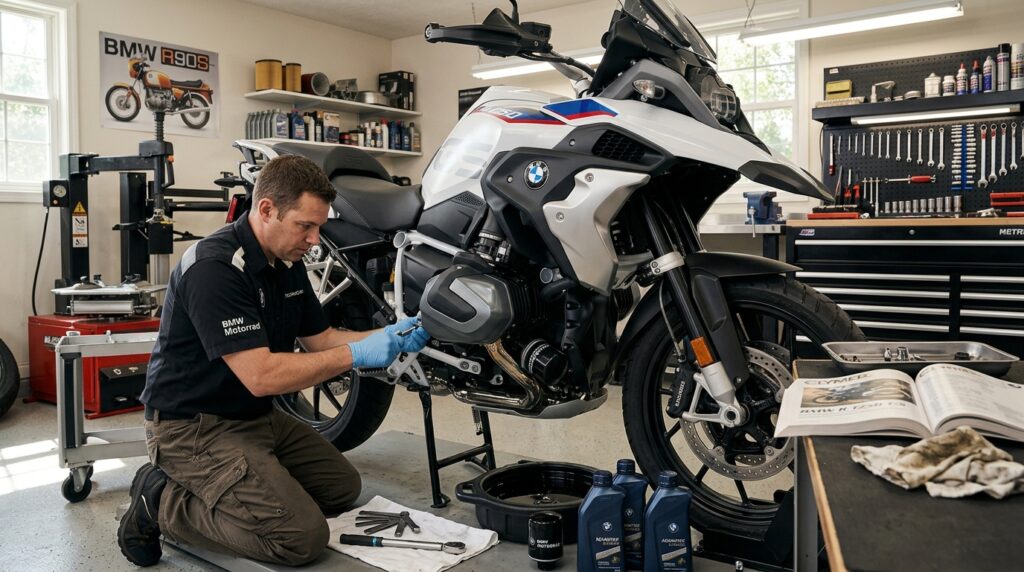
A motorcycle can deliver years of enjoyable and dependable riding when it receives consistent care. Unlike a car, many of a motorcycle’s important mechanical components are exposed and relatively easy to inspect, which gives riders an opportunity to notice developing problems before they become serious.
Keeping a motorcycle performing well does not require replacing parts unnecessarily or becoming an expert mechanic. The fundamentals are much simpler: follow the correct maintenance schedule, keep fluids at appropriate levels, inspect tires and brakes, maintain the drivetrain, pay attention to unusual behavior, and deal with problems while they are still small.
Regular maintenance improves more than reliability. A properly maintained motorcycle generally feels smoother, responds more predictably, and allows the rider to concentrate on the road instead of wondering whether something mechanical is about to fail.
- Begin With the Motorcycle’s Maintenance Schedule
- Check Engine Oil Regularly
- Use the Correct Oil
- Stay on Top of Oil Changes
- Inspect the Air Filter
- Pay Attention to the Cooling System
- Keep the Radiator Clean
- Check Tire Pressure Frequently
- Inspect Tire Condition
- Take Brake Maintenance Seriously
- Maintain the Chain Properly
- Do Not Adjust Chain Tension by Guesswork
- Look After Belt and Shaft Drives
- Monitor the Battery
- Inspect Spark Plugs When Required
- Understand Valve-Clearance Maintenance
- Keep Cables and Controls Working Smoothly
- Check the Clutch
- Practice Smooth Gear Changes
- Keep the Motorcycle Clean
- Protect the Motorcycle From Corrosion
- Inspect the Suspension
- Do Not Ignore Steering Changes
- Check Fasteners Periodically
- Maintain the Exhaust System
- Keep Lights and Signals Working
- Use Quality Tools for Maintenance
- Do Not Skip the Torque Wrench
- Pay Attention to Fuel Quality and Storage
- Warm the Motorcycle Sensibly
- Ride Smoothly to Protect the Machine
- Investigate New Vibrations
- Listen for Unusual Sounds
- Keep Accurate Maintenance Records
- Prepare Carefully for Long Trips
- Do a Quick Pre-Ride Inspection
- Store the Motorcycle Properly
- Know When to Use a Professional Technician
- Fix Small Problems Before They Grow
- Performance Is More Than Horsepower
- Build a Simple Maintenance Routine
- Final Thoughts
Begin With the Motorcycle’s Maintenance Schedule
Every motorcycle has its own maintenance requirements. Engine design, cooling system, drivetrain, valve arrangement, transmission, electrical system, and intended use can all affect what needs attention and when.
The owner’s manual or manufacturer maintenance documentation should therefore be your primary reference. It can identify scheduled tasks such as oil changes, filter replacement, spark-plug inspection, valve-clearance checks, coolant replacement, brake-fluid service, and drivetrain maintenance.
Riders should avoid assuming that a maintenance schedule from one motorcycle automatically applies to another.
People researching motorcycle ownership and performance may encounter automotive resources such as MotoGP Rem. General information can help riders understand maintenance topics, but service intervals and specifications should always be confirmed for the exact motorcycle being maintained.
Check Engine Oil Regularly
Engine oil plays a critical role in lubrication, temperature management, and protection of internal engine components. On many motorcycles, the engine, transmission, and clutch may place significant demands on the lubricant, making the correct specification particularly important.
Check the oil level according to the procedure provided for your motorcycle. Some motorcycles must be upright, others may use a sight glass, and certain engines require specific temperature or waiting conditions before an accurate reading can be obtained.
Do not simply add oil whenever the level looks low without understanding the correct procedure. Overfilling can also create problems.
If your motorcycle begins consuming oil unexpectedly, leaves visible oil beneath the engine, produces unusual smoke, or develops a new mechanical noise, investigate the cause rather than relying on repeated top-ups.
Use the Correct Oil
Not every engine oil with the same viscosity rating is automatically appropriate for every motorcycle.
Motorcycles can require oils meeting particular standards, especially where the same lubricant is used with a wet clutch. An unsuitable product may affect clutch operation or fail to meet the engine manufacturer’s lubrication requirements.
Follow the recommended viscosity and specification for your motorcycle and consider the operating temperature range specified by the manufacturer.
If you are uncertain, verify the requirement before purchasing rather than choosing an oil solely because it is inexpensive or widely available.
Stay on Top of Oil Changes
Even the correct oil deteriorates through use. Heat, contamination, combustion by-products, and mechanical operation gradually affect its condition.
Change the oil according to the specified interval and replace the oil filter when required.
Riding conditions can influence maintenance needs. Frequent short trips, extreme temperatures, dusty environments, extended high-load operation, or intensive stop-and-go use may place additional demands on the motorcycle.
Keep records of oil changes so that maintenance is based on actual mileage and dates rather than memory.
Inspect the Air Filter
An engine requires clean air for efficient combustion. The air filter helps prevent dust and debris from entering the intake system.
As the filter becomes contaminated, airflow may be restricted. The appropriate inspection and replacement interval depends on the motorcycle and its environment.
A motorcycle ridden mainly on clean paved roads may experience very different filter conditions from one frequently used on dusty or unsealed routes.
Some filters are disposable, while others are designed to be cleaned and serviced using specific procedures. Follow the requirements for the filter fitted to your machine.
Pay Attention to the Cooling System
Liquid-cooled motorcycles depend on a properly functioning cooling system to maintain suitable engine temperature.
Check coolant according to manufacturer instructions and inspect the system periodically for signs of leakage. Hoses, clamps, the radiator, cooling fan, water pump, and related components can all contribute to cooling performance.
Never open a pressurized cooling system while it is dangerously hot.
If the motorcycle repeatedly runs hotter than normal, loses coolant, activates temperature warnings, or shows evidence of a leak, investigate promptly. Continued overheating can potentially cause extensive engine damage.
Keep the Radiator Clean
Because motorcycle radiators are often positioned directly in the path of airflow, they can collect insects, mud, dirt, and road debris.
A heavily obstructed radiator may be less effective at transferring heat.
Clean the radiator carefully using methods appropriate for the motorcycle. Radiator fins can be delicate, so aggressive pressure or rough tools may damage them.
Also inspect for bent fins, leaks, or obvious impact damage, particularly after riding on roads where loose stones and debris are common.
Check Tire Pressure Frequently
Tires are among the most important components on a motorcycle because only relatively small contact areas connect the machine to the road.
Incorrect tire pressure can influence handling, braking, tire wear, comfort, and stability.
Check pressure when the tires are in the condition specified by the motorcycle or tire manufacturer, commonly before significant riding has warmed them. Use a reliable gauge and follow the recommended pressure for the load and riding circumstances.
Pressure may need to be adjusted when carrying a passenger or luggage if the manufacturer specifies different settings.
Inspect Tire Condition
Pressure alone is not enough. Look closely at the tread and sidewalls for cuts, cracks, punctures, embedded objects, bulges, uneven wear, or other damage.
Pay attention to changes in the motorcycle’s handling. New vibration, unusual steering behavior, or difficulty maintaining a consistent line may justify further inspection.
Tires also age even when they retain visible tread. Their condition should therefore be assessed rather than assuming low mileage automatically means they remain suitable indefinitely.
When replacement is required, choose tires appropriate for the motorcycle, wheel dimensions, load requirements, and intended use.
Take Brake Maintenance Seriously
Reliable braking is fundamental to motorcycle safety.
Inspect brake pads according to the service schedule and monitor the condition of discs, hoses, fluid, and related components. Different motorcycles provide different ways to inspect pad wear, so consult the appropriate documentation.
Changes in brake feel deserve immediate attention. A lever that suddenly feels unusually soft, excessive travel, new vibration, grinding noises, reduced braking performance, or visible fluid leakage should not be ignored.
Brake-fluid condition also matters because the fluid can absorb moisture over time. Replace it at the recommended interval using the specified type.
Maintain the Chain Properly
Many motorcycles transfer engine power to the rear wheel through a chain. A correctly maintained chain can provide reliable service, while neglect can accelerate wear and affect riding quality.
Inspect chain tension or slack according to the motorcycle manufacturer’s procedure. Too much slack may create poor drivetrain behavior, while excessive tightness can place unnecessary load on components as the suspension moves.
Clean and lubricate the chain as appropriate for its design and operating conditions.
When checking the chain, also examine the sprockets. Worn or damaged sprocket teeth can indicate that drivetrain components require attention.
Do Not Adjust Chain Tension by Guesswork
Chain adjustment should be completed according to the motorcycle’s specified measurement procedure.
The required slack can differ substantially between models because suspension geometry affects how chain tension changes as the rear wheel moves through its travel.
After adjustment, ensure the rear wheel remains correctly aligned and that all fasteners are tightened according to appropriate specifications.
If you are uncomfortable making these adjustments yourself, professional servicing is preferable to an inaccurate setup.
Look After Belt and Shaft Drives
Not every motorcycle uses a chain. Some motorcycles use belts, while others use shaft-drive systems.
These alternatives may require less frequent routine attention, but they are not maintenance-free.
Belt-driven motorcycles can require inspection for correct tension, damage, wear, contamination, or trapped debris. Shaft-drive motorcycles may have gear oil or other scheduled service requirements.
Follow the maintenance procedure specific to the drivetrain rather than applying chain-maintenance habits to a fundamentally different system.
Monitor the Battery
Motorcycle batteries can be particularly sensitive to long periods of inactivity. A motorcycle that remains parked for weeks or months may gradually lose charge, especially if electrical accessories or security systems continue drawing current.
Inspect terminals for looseness or corrosion and watch for signs of a weakening battery, such as slower starting or unusual electrical behavior.
If the motorcycle is stored for extended periods, a suitable battery-maintenance charger may be useful when used according to the battery and charger manufacturers’ instructions.
Do not immediately blame the battery for every starting problem. Charging-system faults, wiring issues, starter problems, fuel delivery, or other causes can create similar symptoms.
Inspect Spark Plugs When Required
Spark plugs are relatively small components but play an important role in combustion in petrol-powered motorcycles.
Service schedules may call for periodic inspection or replacement depending on plug type and engine design.
Worn or damaged spark plugs can contribute to difficult starting, poor running, misfires, or inefficient combustion, although these symptoms can have many other causes as well.
Use the exact plug specification recommended for the motorcycle and follow correct installation procedures.
Understand Valve-Clearance Maintenance
Many motorcycle engines require periodic valve-clearance inspection.
As engine components wear and settle, clearances can change. Incorrect valve clearance may eventually affect starting, performance, noise, or engine durability.
The required interval varies widely between motorcycles. Some machines may go substantial distances between inspections, while others require checks more frequently.
Valve adjustment can be mechanically complex on certain motorcycles, so many riders choose to have this work completed by a qualified technician.
Keep Cables and Controls Working Smoothly
Throttle, clutch, and other mechanical controls should operate smoothly and predictably.
Inspect cables where applicable for damage, fraying, excessive resistance, or incorrect adjustment. Lubrication requirements depend on cable design, so do not automatically apply lubricant without checking the appropriate procedure.
Control free play may also require adjustment according to the motorcycle manufacturer’s specifications.
A throttle should return correctly when released. Any sticking or abnormal resistance should be investigated before riding.
Check the Clutch
A properly functioning clutch allows smooth power transfer and controlled gear changes.
Depending on the motorcycle, the clutch may be cable-operated or hydraulic. Each system has different maintenance considerations.
Symptoms such as slipping under acceleration, difficulty disengaging, inconsistent engagement, excessive lever movement, or unusual noises should be investigated.
Riders researching general motorcycle and vehicle maintenance topics may encounter resources such as Monotukuru. Regardless of the information source, clutch adjustments and repair decisions should follow the specifications and mechanical design of the individual motorcycle.
Practice Smooth Gear Changes
Riding technique affects mechanical wear as well as comfort.
Smooth clutch operation and well-timed gear changes reduce unnecessary shock through the drivetrain. Forcing shifts, repeatedly slipping the clutch unnecessarily, or using abrupt throttle inputs can place additional stress on components.
Motorcycles equipped with quickshifters or other shifting technology should be operated according to the system’s intended use.
Good technique generally improves both the riding experience and mechanical sympathy.
Keep the Motorcycle Clean
Cleaning a motorcycle is useful for more than appearance.
Dirt and grime can hide leaks, damaged fasteners, cracks, loose components, or deterioration. Washing the machine periodically creates an opportunity to inspect areas that might otherwise receive little attention.
Use motorcycle-safe cleaning products and avoid forcing high-pressure water into bearings, electrical connectors, seals, air intakes, or other vulnerable areas.
After cleaning, inspect important components before the next ride.
Protect the Motorcycle From Corrosion
Moisture, road salt, humidity, and environmental contamination can encourage corrosion.
Motorcycles used in coastal areas or winter conditions may require additional attention because exposed metal components are particularly vulnerable.
Wash away corrosive deposits, keep drainage areas clear, and use appropriate protective products where recommended.
Small areas of corrosion are generally easier to manage when discovered early than after they have spread across fasteners, electrical connections, exhaust components, or structural surfaces.
Inspect the Suspension
Suspension affects handling, braking stability, comfort, and tire contact with the road.
Look for leakage around fork seals and rear suspension components. Pay attention to unusual bouncing, knocking, instability, or changes in ride quality.
Some motorcycles allow adjustment of preload, damping, or other suspension settings. These adjustments should be made systematically rather than randomly.
If you frequently carry a passenger or luggage, consult the motorcycle documentation to determine whether suspension settings should be changed for the additional load.
Do Not Ignore Steering Changes
A motorcycle should steer predictably without unusual resistance, looseness, shaking, or instability.
If steering behavior changes, possible causes can include tire pressure, tire wear, wheel alignment, steering-head bearings, suspension, wheel bearings, or other mechanical factors.
Do not continue compensating for abnormal handling until it begins to feel normal. A gradual mechanical problem can become easy to overlook when the rider unconsciously adapts to it.
Have unusual steering behavior inspected promptly.
Check Fasteners Periodically
Motorcycles are exposed to vibration, road impacts, heat cycles, and weather. Fasteners that secure important components therefore deserve appropriate inspection.
This does not mean randomly tightening every bolt as hard as possible. Over-tightening can damage threads, components, or fasteners.
Critical fasteners should be tightened to the correct torque using the procedures specified for the motorcycle.
If you discover that a particular fastener repeatedly becomes loose, investigate the underlying reason instead of continuously tightening it.
Maintain the Exhaust System
Inspect the exhaust periodically for loose mounts, visible damage, unusual corrosion, or leaks.
A change in exhaust sound can sometimes be the first indication that a connection or component has developed a problem.
Exhaust parts become extremely hot during operation, so inspections should be performed only when the motorcycle is safely cooled.
Aftermarket exhaust modifications can affect noise, emissions compliance, engine behavior, insurance requirements, and legality depending on the jurisdiction. Any modification should therefore be considered carefully.
Keep Lights and Signals Working
A motorcycle’s small physical profile can make visibility to other road users a concern, making functional lighting particularly important.
Regularly check the headlight, brake light, indicators, tail light, and number-plate illumination where applicable.
Confirm that both front and rear brake controls activate the brake light correctly.
Clean lenses when they become covered with dirt or road grime, and investigate electrical problems instead of simply replacing bulbs repeatedly if failures continue.
Use Quality Tools for Maintenance
Home maintenance becomes easier and safer when the correct tools are available.
A basic motorcycle toolkit may include suitable sockets, spanners, screwdrivers, hex tools, a tire-pressure gauge, torque wrench, and other equipment depending on the motorcycle.
Specialized jobs may require stands, diagnostic equipment, chain tools, electrical meters, or manufacturer-specific tools.
Riders researching automotive equipment may encounter sources such as Car Tool Express. Whatever tools are selected, they should be suitable for the particular job and used according to safe procedures rather than improvising with equipment that may damage fasteners or components.
Do Not Skip the Torque Wrench
Correct torque matters on many motorcycle components.
A fastener that is too loose may move or detach, while excessive tightening can strip threads, distort components, or damage the fastener.
A suitable torque wrench allows important fasteners to be tightened according to specification.
However, proper use also matters. Torque specifications may depend on whether threads are dry, lubricated, or treated with another product, so always follow the relevant service instructions.
Pay Attention to Fuel Quality and Storage
Use fuel meeting the motorcycle manufacturer’s minimum specification.
Higher octane is not automatically better if the engine does not require it, while fuel below the required specification may affect operation.
Long-term storage introduces additional considerations because fuel can degrade over time and certain fuel systems are sensitive to deposits or contamination.
If the motorcycle will remain unused for an extended period, follow appropriate storage procedures for the machine and local fuel formulation.
Warm the Motorcycle Sensibly
Modern motorcycles generally do not benefit from excessive stationary idling before every journey.
Follow manufacturer guidance, allow the engine to establish stable operation, and ride gently until the engine and other mechanical components reach normal operating conditions.
Avoid immediately demanding maximum performance from a cold engine.
Remember that engine coolant temperature does not necessarily mean every fluid, bearing, tire, and drivetrain component has reached optimal operating temperature.
Ride Smoothly to Protect the Machine
A motorcycle is designed to be ridden, but unnecessarily harsh operation can increase wear.
Abrupt clutch use, aggressive gear changes, repeated hard acceleration on a cold engine, hitting potholes at speed, and poor braking technique can place unnecessary loads on components.
Smooth operation does not mean slow or timid riding. It means using controls progressively and understanding what the motorcycle is doing.
Mechanical sympathy and good riding technique often complement each other.
Investigate New Vibrations
Motorcycles naturally produce some vibration, and the amount varies according to engine configuration and design.
What matters is recognizing a vibration that is new or noticeably different.
Changes can potentially originate from tires, wheels, drivetrain components, loose fasteners, engine issues, suspension, or other sources.
Do not assume every vibration is harmless simply because motorcycles normally vibrate. If the character of the machine changes, determine why.
Listen for Unusual Sounds
Becoming familiar with your motorcycle’s normal mechanical sounds makes abnormal noises easier to recognize.
New knocking, rattling, grinding, squealing, clicking, or scraping deserves attention.
Some sounds may be harmless characteristics of a particular motorcycle, while others can indicate wear or developing failure.
If you cannot identify the source confidently, have the motorcycle inspected instead of continuing to ride until the noise becomes severe.
Keep Accurate Maintenance Records
Record every significant service task, including dates, mileage, parts, fluids, adjustments, and repairs.
Maintenance records prevent confusion about when work was last completed and make future servicing easier to plan.
They can also help identify recurring problems. For example, if the same adjustment is required unusually frequently, records may reveal a pattern worth investigating.
A documented service history can also be useful if you eventually sell the motorcycle.
Prepare Carefully for Long Trips
A motorcycle that behaves perfectly during short local rides should still receive a pre-trip inspection before a long journey.
Check tires, pressures, brakes, fluids, chain or other drivetrain components, lights, battery condition, controls, and visible fasteners.
Consider whether any scheduled maintenance will become due during the trip. Completing necessary service beforehand may be easier than locating suitable assistance while travelling.
Carry tools and emergency equipment appropriate to the motorcycle, route, and your mechanical ability.
Do a Quick Pre-Ride Inspection
A brief inspection before riding can identify obvious problems before they become dangerous on the road.
Look at the tires, check for visible leaks, confirm the controls operate normally, verify important lights, inspect the drivetrain where practical, and pay attention to anything that appears different from the previous ride.
This does not need to become a lengthy mechanical examination every time you start the motorcycle.
The goal is simply to notice obvious changes before leaving.
Store the Motorcycle Properly
If your motorcycle will remain unused for an extended period, proper storage can reduce deterioration.
Depending on storage duration and climate, this may involve battery maintenance, fuel-system preparation, cleaning, corrosion protection, tire care, fluid checks, and protection from weather.
Store the motorcycle in a secure, dry environment where practical.
When bringing it back into use, inspect it thoroughly rather than assuming it remains in exactly the same condition as when it was parked.
Know When to Use a Professional Technician
There is satisfaction in maintaining a motorcycle yourself, but knowing your limitations is equally important.
Complex engine work, internal transmission repairs, advanced electrical diagnosis, ABS repairs, valve adjustments on difficult engines, suspension rebuilding, or other specialized jobs may require professional tools and expertise.
If a repair affects a safety-critical system and you are uncertain about the procedure, professional assistance is the sensible choice.
Good motorcycle ownership is not measured by completing every repair personally. It is measured by ensuring the work is completed correctly.
Fix Small Problems Before They Grow
A minor issue can sometimes develop into an expensive repair when ignored.
A small coolant leak can become overheating. A loose drivetrain component can accelerate wear. A damaged fork seal can allow fluid to contaminate nearby components. A weak battery may leave you unable to start the motorcycle away from home.
Addressing problems early generally provides more choices and reduces the chance of an unexpected breakdown.
Performance Is More Than Horsepower
Keeping a motorcycle performing at its best does not simply mean preserving maximum engine output.
True everyday performance includes predictable braking, precise steering, smooth throttle response, reliable starting, correct tire behavior, comfortable suspension, clean gear changes, and confidence that the motorcycle will respond consistently.
A perfectly maintained modest motorcycle can be more enjoyable to ride than a much more powerful machine suffering from worn tires, neglected brakes, poor chain adjustment, or unresolved mechanical problems.
Build a Simple Maintenance Routine
The easiest way to maintain a motorcycle consistently is to divide maintenance into simple intervals.
Before rides, look for obvious problems. Periodically check pressures, fluids, chain condition, lights, and controls. At scheduled mileage or time intervals, complete the services specified by the manufacturer.
Keep records and plan larger maintenance tasks in advance.
Once these habits become routine, motorcycle maintenance requires far less mental effort because important tasks are no longer being remembered at the last minute.
Final Thoughts
A motorcycle performs best when maintenance is consistent rather than reactive. Follow the correct service schedule, use specified fluids and parts, maintain the tires and brakes, inspect the drivetrain, monitor the battery, and remain alert to changes in sound, vibration, handling, or engine behavior.
Combine mechanical care with smooth riding habits. Allow the motorcycle to warm appropriately, operate controls progressively, avoid unnecessary mechanical stress, and perform a quick inspection before important journeys.
Most importantly, respond when something changes. Motorcycles often provide early clues before a component fails completely. A rider who recognizes those signals and acts promptly can prevent many avoidable problems.
Regular maintenance may require a little time and attention, but the reward is substantial: a motorcycle that starts reliably, handles predictably, performs consistently, and remains enjoyable every time you head out on the road.