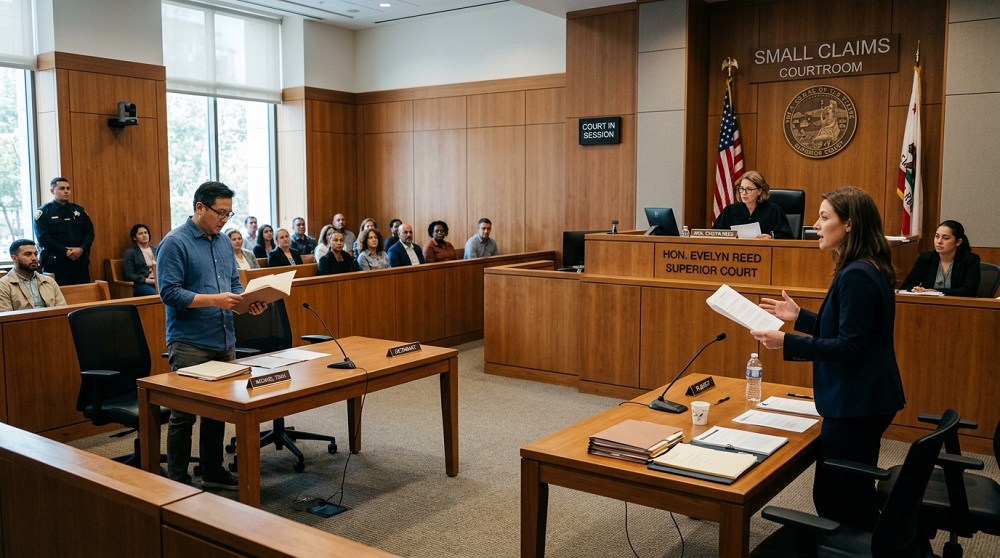
Small claims court exists so ordinary people can resolve money disputes without hiring a lawyer. The rules are simplified, filing fees are modest, and cases often conclude in a single short hearing. Here is how the process works from start to finish.
What Small Claims Court Handles
It is designed for straightforward money disputes: unreturned security deposits, unpaid personal loans, shoddy contractor work, damaged property, or a client who never paid an invoice.
Each state sets a dollar ceiling, commonly between $2,500 and $15,000. If your claim exceeds that limit, you can waive the excess and stay in small claims, or file in a higher court where procedure is more complex. The court generally cannot order someone to do something — it awards money.
Before You File: Send a Demand Letter
Write to the other party stating what happened, what you want, and a deadline to respond. Many disputes settle at this stage once the other side realizes you are serious. Some courts also expect to see that you attempted resolution first. Send it by certified mail and keep the receipt.
Step 1: Confirm the Basics
Three things determine whether your case can proceed:
- The amount falls within your state’s limit
- The deadline has not passed; statutes of limitations typically run two to six years depending on the claim type
- The venue is correct, usually the county where the defendant lives or where the dispute occurred
Step 2: Name the Right Defendant
This trips up more filings than anything else. Suing “Joe’s Roofing” when the business is legally Joseph Martinez Contracting LLC can get your case dismissed. Check your state’s business registry for the exact legal name and the registered agent’s address.
Step 3: File Your Paperwork
Obtain the complaint form from the courthouse clerk or the court’s website. You will describe the dispute in a few sentences, state the amount sought, and pay a filing fee, typically $30 to $100. Fee waivers are available for low-income filers. The clerk assigns a case number and a hearing date, often four to eight weeks out.
Step 4: Serve the Defendant
The other party must receive formal notice. Depending on your jurisdiction, service happens by certified mail, the sheriff’s office, or a private process server. Handle this promptly and file the proof of service with the court; improper service is the most common reason hearings get postponed.
Preparing Your Evidence
Judges decide these cases quickly, so bring organized documentation:
- Contracts, invoices, receipts, and cancelled checks
- Text messages and emails, printed rather than shown on a phone
- Photographs of damage or defective work
- Repair estimates from independent sources
- Witnesses who observed the events directly
Prepare three copies of everything: one for the judge, one for the opposing party, one for yourself.
Hearing Day
Arrive early, dress neatly, and expect the whole matter to take fifteen minutes or less. You will explain your position, present evidence, and answer the judge’s questions. Keep it chronological and factual; emotional arguments rarely help. The defendant responds, and many judges rule from the bench that day.
If the defendant fails to appear, you will likely win by default.
Winning Is Not the Same as Collecting
A judgment is a court order, not a check. If the losing party does not pay voluntarily, you may need to pursue wage garnishment, a bank levy, or a lien. Factor this in before suing someone with no assets.
Bottom Line
Small claims court rewards preparation over legal knowledge. Document carefully, name the defendant correctly, and present your case plainly.
This article is general information, not legal advice. Procedures and dollar limits vary by state.