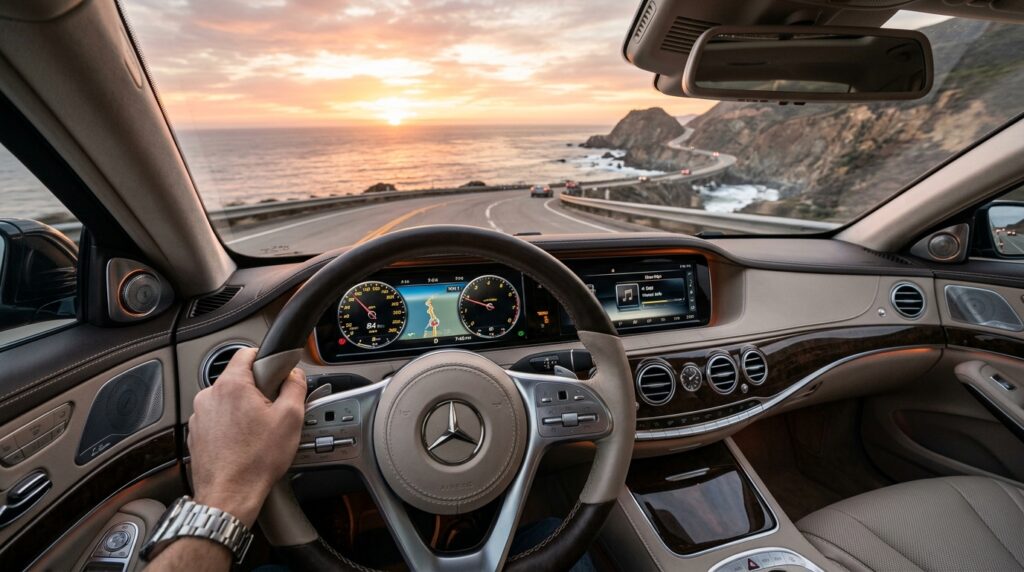
Driving is something millions of people do every day, yet familiarity does not automatically make someone a skilled driver. The habits that separate careful, professional-style driving from ordinary driving are often surprisingly simple: observing the road early, maintaining appropriate space, controlling speed smoothly, anticipating other road users, and making decisions before a situation becomes dangerous.
Professional driving skills are useful far beyond careers involving buses, taxis, trucks, or other commercial vehicles. Many of the same principles can help ordinary motorists make commuting, family trips, city journeys, and long-distance travel safer and less stressful.
The goal is not to drive like a racing professional or demonstrate advanced vehicle-control techniques. For everyday road users, professional driving means being predictable, attentive, prepared, and capable of managing risk before an emergency develops.
- Good Driving Begins With Observation
- Maintain Enough Following Distance
- Learn to Anticipate Rather Than React
- Use Smooth Acceleration and Braking
- Understand Speed Beyond the Posted Limit
- Develop Proper Mirror Habits
- Improve Lane Discipline
- Build Skills Through Proper Learning
- Communicate Clearly With Other Road Users
- Respect Vulnerable Road Users
- Manage Intersections Carefully
- Learn How to Drive Safely at Night
- Adjust Your Driving for Rain
- Stay Calm in Heavy Traffic
- Control Distractions Before Moving
- Recognize the Effects of Fatigue
- Think Like a Passenger Driver
- Know Your Vehicle’s Dimensions
- Leave Yourself an Escape Route
- Be Extra Careful When Reversing
- Do Not Compete With Aggressive Drivers
- Prepare the Vehicle Before Every Important Journey
- Plan Routes Without Becoming Dependent on Navigation
- Review Your Own Driving Habits
- Professional Habits Make Ordinary Journeys Better
- Final Thoughts
Good Driving Begins With Observation
One of the most valuable driving skills is learning to observe more than the vehicle immediately ahead. A driver who looks farther along the road has more time to recognize developing situations and respond gradually.
Watch traffic flow, intersections, pedestrians, cyclists, parked vehicles, road signs, surface conditions, and potential escape routes. Mirrors should also be checked regularly so that you maintain an awareness of what is happening around the vehicle rather than discovering another road user only when you need to change direction.
Professional drivers often operate vehicles for extended periods and in demanding traffic environments, making systematic observation particularly important. People interested in the broader subject of professional road transport may encounter resources such as Bus Driverse while exploring driving-related information.
The underlying lesson applies to every driver: the earlier you notice a developing hazard, the more options you usually have for dealing with it safely.
Maintain Enough Following Distance
Driving too closely behind another vehicle dramatically reduces the amount of time available to respond when traffic slows unexpectedly.
A reasonable following distance creates a buffer. If the vehicle ahead brakes, you have additional time to recognize the change, reduce speed, and stop without relying on an aggressive last-second reaction.
The appropriate distance depends on conditions. Rain, poor visibility, slippery surfaces, darkness, heavy traffic, and other factors can increase stopping distances or reduce the time available to recognize hazards.
Large vehicles can also obstruct your view of traffic ahead. Leaving additional space may improve both visibility and decision-making.
Learn to Anticipate Rather Than React
Safe driving is largely about prediction. Experienced drivers continuously ask what might happen next.
A pedestrian standing near a crossing might enter the road. A vehicle approaching an intersection may turn. A parked car may have someone inside who is about to open a door. A ball rolling into the street could be followed by a child. Brake lights several vehicles ahead may indicate that traffic is beginning to slow.
None of these observations guarantee that something dangerous will happen. Anticipation simply means recognizing possibilities early enough to prepare.
Reducing accelerator pressure slightly, covering the brake when appropriate, or creating more space can provide valuable additional reaction time without requiring abrupt maneuvers.
Use Smooth Acceleration and Braking
Smooth vehicle control is an important characteristic of skilled driving. Hard acceleration followed by repeated heavy braking wastes energy, increases wear, and can make passengers uncomfortable.
Looking farther ahead allows you to adjust speed gradually. If traffic is clearly slowing in the distance, easing off the accelerator early may reduce the need for sudden braking later.
Smooth control is particularly valuable in wet or slippery conditions because abrupt steering, acceleration, or braking can make it harder to maintain stability.
Passengers also benefit. Someone who drives professionally with passengers aboard must think not only about reaching the destination but also about providing a controlled, predictable journey. Ordinary drivers carrying family or friends can apply exactly the same principle.
Understand Speed Beyond the Posted Limit
A posted speed limit establishes a legal maximum under applicable conditions; it does not mean that driving at that exact speed is appropriate in every situation.
Traffic density, visibility, weather, road surface, pedestrians, construction activity, and the design of the road can all require a lower speed.
A skilled driver continually asks whether the current speed provides enough time and distance to react to foreseeable hazards.
Speed selection is particularly important around schools, residential streets, busy pedestrian areas, sharp curves, intersections, and locations where visibility is restricted.
Develop Proper Mirror Habits
Mirrors should provide an ongoing picture of traffic around the vehicle. Checking them only immediately before changing lanes can leave significant gaps in situational awareness.
Regular mirror checks help you understand whether another vehicle is approaching quickly, whether someone is following closely, or whether a motorcycle or bicycle has moved alongside you.
Mirrors also have limitations. Areas around a vehicle may not be visible through mirrors alone, which is why appropriate blind-spot checks remain important before certain maneuvers.
The objective is to combine forward observation, mirrors, and direct checks so that important decisions are based on as complete a picture as possible.
Improve Lane Discipline
Good lane discipline makes your intentions easier for other road users to understand. Stay appropriately positioned within your lane, use indicators in sufficient time, and avoid unnecessary lane changes.
Before changing lanes, assess whether there is enough space and whether another road user could be hidden from view. Signal your intention, but remember that an indicator communicates a plan—it does not automatically give you the right to move.
After completing the maneuver, establish a safe position and continue monitoring surrounding traffic.
Frequent aggressive lane changes may save little time while creating additional opportunities for conflict.
Build Skills Through Proper Learning
Passing a driving test is an important milestone, but driving ability continues developing afterward. Road conditions vary enormously, and experience exposes drivers to situations that may not occur during initial training.
Drivers can continue improving by reviewing road rules, correcting weak habits, practicing under suitable supervision where appropriate, and seeking qualified instruction when additional training would be useful.
People exploring driving education may come across resources such as Learn2Drive4Free. Whatever learning method is used, the most valuable approach is one that reinforces safe observation, appropriate vehicle control, sound judgment, and compliance with local road rules.
Drivers should also be willing to reconsider habits they have developed over time. Experience is useful only when it reinforces good decisions rather than making risky behavior feel normal.
Communicate Clearly With Other Road Users
Road safety depends partly on communication. Indicators, brake lights, vehicle positioning, headlights where appropriate, and predictable movement help other road users understand what you intend to do.
Signal early enough to be useful, but avoid signaling so early that your intention becomes confusing. Check that your intended maneuver remains safe before completing it.
Predictability is particularly valuable in busy traffic. Sudden turns, unexpected lane changes, and abrupt stops force other drivers to react quickly.
A skilled driver tries to avoid surprising others.
Respect Vulnerable Road Users
Pedestrians, cyclists, motorcyclists, children, elderly people, and people with mobility limitations may be especially vulnerable during road conflicts.
Give them appropriate space and additional consideration. A cyclist may need to change position to avoid a pothole. A pedestrian may misjudge vehicle speed. A motorcyclist can be difficult to see in certain traffic situations.
Never assume that another road user has seen you simply because you can see them.
Extra patience around vulnerable users may add seconds to a journey while substantially reducing risk.
Manage Intersections Carefully
Intersections require drivers to process information from several directions simultaneously. Traffic signals, signs, pedestrians, bicycles, turning vehicles, and approaching traffic may all need attention.
Approach at a speed that allows you to understand the situation. Avoid entering an intersection simply because the vehicle ahead has moved unless you have confirmed that there is enough space for you to proceed safely.
When turning, check for road users who may cross your path. Where visibility is limited, proceed cautiously rather than assuming the road is clear.
A moment of additional observation at an intersection can prevent a much more serious problem.
Learn How to Drive Safely at Night
Night driving creates additional challenges because visibility is reduced and judging distances can become more difficult.
Keep windscreens, mirrors, and lights clean. Use vehicle lighting appropriately and make sure important exterior lights are functioning.
Adjust speed so that you have enough time to respond to hazards within the distance you can see clearly. Be particularly cautious around poorly illuminated intersections, pedestrians, cyclists, animals, and roadworks.
Glare from approaching headlights can also affect visibility. Avoid staring directly into bright lights and maintain attention on an appropriate reference point on the road.
Adjust Your Driving for Rain
Rain can reduce visibility and tire grip while increasing stopping distance. Heavy rain may also create standing water that affects vehicle stability.
Reduce speed when conditions require it, increase following distance, use appropriate lighting, and avoid abrupt steering or braking.
Tires become particularly important in wet weather. Correct pressure and adequate tread help them perform as intended, although no tire can eliminate the risks associated with excessive speed or deep standing water.
If visibility becomes severely limited, prioritize safety rather than maintaining your usual journey pace.
Stay Calm in Heavy Traffic
Congestion can test patience, but frustration does not make traffic move faster. Aggressive acceleration, unnecessary lane changes, following too closely, and competing for small gaps can increase risk without producing a meaningful improvement in journey time.
Maintain space, watch traffic patterns ahead, and accept that delays are sometimes unavoidable.
Professional drivers often spend substantial portions of their working day in traffic. Emotional control is therefore an important practical driving skill—and it is equally useful for everyday motorists.
Control Distractions Before Moving
Driving requires continuous attention. A few seconds spent looking away from the road can cover a significant distance, particularly at higher speeds.
Set navigation, mirrors, seating position, climate controls, and audio preferences before beginning the journey whenever practical. Secure loose objects that could move around the cabin.
Avoid interacting with a handheld phone while driving and follow the applicable laws concerning mobile-device use.
Even hands-free conversations or complicated infotainment tasks can consume mental attention. When traffic conditions become demanding, driving should receive priority.
Recognize the Effects of Fatigue
Tiredness can reduce concentration, judgment, and reaction ability. It can be particularly dangerous on long, monotonous journeys where drivers may underestimate how sleepy they have become.
Warning signs can include frequent yawning, difficulty concentrating, missing signs or exits, struggling to remember the previous part of the journey, or difficulty maintaining consistent lane position.
Planning adequate rest before a journey is better than trying to overcome severe fatigue after it develops. For long trips, build suitable breaks into the schedule and avoid creating arrival deadlines that encourage unsafe decisions.
If you are too tired to drive safely, reaching the destination later is preferable to continuing in an unsafe condition.
Think Like a Passenger Driver
Taxi and passenger-transport drivers have an additional responsibility: their driving directly affects the comfort and safety of people who may not know them personally.
Everyday drivers can benefit from adopting the same mindset. Imagine that every journey is being evaluated for smoothness, predictability, and passenger comfort.
Someone researching the wider world of taxi and vehicle-related topics may encounter sites such as Taxi BMW. The broader lesson for ordinary motorists is simple: carrying passengers should encourage an even greater focus on controlled acceleration, gentle braking, safe spacing, and responsible decision-making.
If passengers can relax because your movements are predictable, that is often a sign of smooth driving technique.
Know Your Vehicle’s Dimensions
Good drivers develop an accurate understanding of the space their vehicle occupies. This becomes especially important when parking, navigating narrow roads, passing obstacles, or driving a larger vehicle than usual.
Learn where the corners of the vehicle are in relation to your seating position. Understand its turning characteristics and how much space it needs.
Cameras and parking sensors can be helpful, but they should support rather than completely replace direct observation and mirror use.
When driving an unfamiliar vehicle, spend time adjusting mirrors and becoming comfortable with its dimensions before entering demanding traffic.
Leave Yourself an Escape Route
Defensive driving involves avoiding situations where your only option is emergency braking.
Whenever practical, maintain enough surrounding space to respond if another road user makes a mistake. Avoid remaining unnecessarily beside another vehicle, especially if that position limits your options.
In moving traffic, continually consider where you could safely move if something unexpected occurred ahead.
This does not mean constantly expecting a crash. It simply means maintaining awareness of alternatives before you need them.
Be Extra Careful When Reversing
Reversing can be hazardous because visibility around the vehicle is limited. Before moving, check the area and look for pedestrians, children, animals, obstacles, and other vehicles.
Reverse slowly enough to stop immediately if circumstances change.
Rear cameras and sensors can improve awareness, but drivers should understand their limitations. Camera lenses can become dirty, objects may be outside the camera’s field of view, and sensors may not detect every obstacle.
Whenever possible, organize parking so that departure can be completed with good visibility and minimal reversing.
Do Not Compete With Aggressive Drivers
Another driver’s impatience does not require a response from you. If someone follows too closely, attempts an aggressive overtake, or behaves confrontationally, avoid turning the situation into a competition.
Maintain control, follow road rules, and create space where it is safe to do so. Do not accelerate simply to prevent another vehicle from passing.
The objective is to arrive safely, not to prove who has priority in an unnecessary confrontation.
Emotional discipline is one of the most underrated professional driving skills.
Prepare the Vehicle Before Every Important Journey
Driving skill cannot completely compensate for a poorly maintained vehicle. Tires, brakes, lights, mirrors, wipers, and other essential components need to be in suitable condition.
Before a long or demanding journey, check important vehicle basics and investigate warning lights or unusual symptoms. Ensure that you have enough fuel or charge for the planned route and consider where refueling or charging will be available.
Adjust your seat and mirrors before moving. Secure luggage so that it cannot interfere with occupants or controls.
A properly prepared vehicle allows the driver to concentrate on the road instead of dealing with avoidable problems during the journey.
Plan Routes Without Becoming Dependent on Navigation
Navigation systems can make travel significantly easier, especially in unfamiliar areas. However, following instructions without observing road signs and actual conditions can create problems.
Review the general route before departure so you understand the main direction of travel. Listen to navigation instructions rather than repeatedly looking at the screen.
If you miss a turn, continue safely and allow the system to calculate another route. Sudden braking, reversing, or cutting across several lanes because of a missed exit is rarely worth the risk.
Road signs, closures, temporary traffic management, and instructions from authorized personnel take priority over blindly following a digital route.
Review Your Own Driving Habits
Improvement requires self-awareness. Occasionally consider whether you follow too closely, accelerate unnecessarily, forget mirror checks, become impatient in traffic, or allow distractions to take too much attention.
Many poor habits become automatic precisely because they have not yet caused an obvious problem.
Correcting them before an incident occurs is much easier than learning the same lesson after a collision or frightening near miss.
Experienced drivers should remain particularly open to improvement. Years behind the wheel provide valuable experience, but they can also make certain habits feel safer than they really are.
Professional Habits Make Ordinary Journeys Better
You do not need to drive professionally to benefit from professional driving principles. Observation, anticipation, patience, smooth control, appropriate speed, safe spacing, clear communication, and emotional discipline improve almost every type of road journey.
These habits can also make driving more comfortable. When you identify traffic changes early, you brake less abruptly. When you maintain space, you feel less pressured. When you plan your route and control distractions, you can focus more effectively on the road.
Safe driving is therefore not simply about avoiding collisions. It is about creating enough time, space, and information to make good decisions consistently.
Final Thoughts
Professional driving skills are built around preparation rather than last-second reactions. Skilled drivers observe farther ahead, anticipate possible hazards, maintain appropriate following distances, communicate clearly, control the vehicle smoothly, and adapt their behavior to changing conditions.
Everyday motorists can use these same principles whether they are commuting to work, carrying family members, travelling through busy city streets, or completing a long highway journey.
The most useful driving skill is ultimately good judgment. Stay attentive, respect other road users, maintain your vehicle, follow applicable road rules, and avoid allowing impatience or distraction to control your decisions. When these habits become routine, everyday travel becomes safer, smoother, and more predictable for everyone sharing the road.