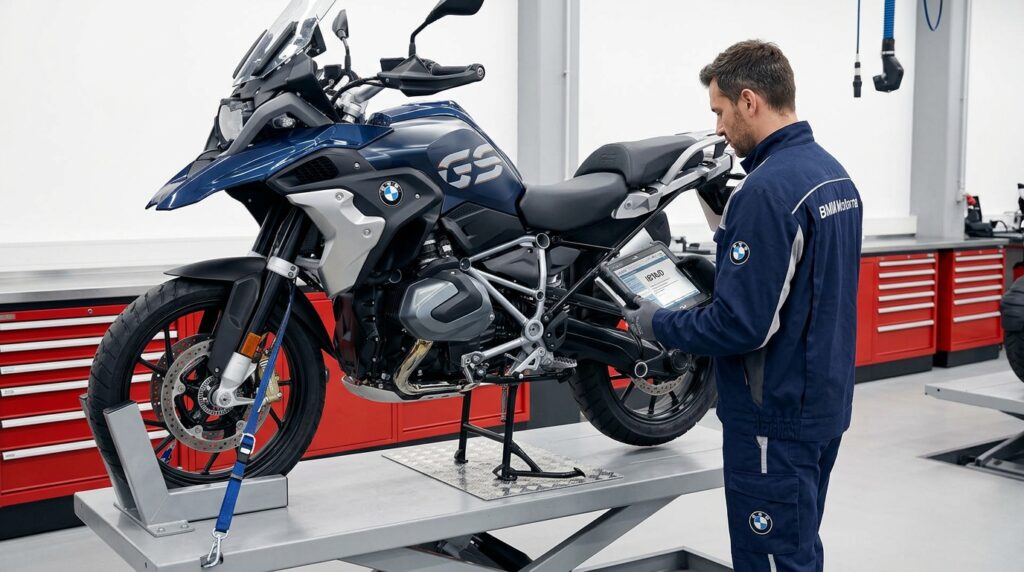
Choosing a motorcycle is very different from choosing a machine simply because it looks impressive in a showroom. Motorcycles are highly personal vehicles, and factors such as riding position, engine characteristics, weight, seat height, wind protection, handling, and intended use can dramatically affect how enjoyable a bike feels once you begin riding it regularly.
The ideal motorcycle for a daily city commuter may be completely different from the right choice for someone planning weekend mountain rides or long-distance touring. Likewise, a powerful sport motorcycle that excites an experienced rider might be unnecessarily demanding for someone still developing basic riding skills.
A better approach is to begin with your riding style. Think honestly about where you will ride, how far you will travel, how much experience you have, what level of comfort you expect, and how much motorcycle you can realistically manage. Once those questions are answered, finding the right bike becomes much easier.
- Start With the Type of Riding You Will Actually Do
- Understand the Main Motorcycle Categories
- Standard and Naked Motorcycles
- Sport Motorcycles
- Cruisers
- Touring Motorcycles
- Adventure and Dual-Sport Motorcycles
- Scooters
- Be Honest About Your Experience Level
- Do Not Choose Engine Size in Isolation
- Consider the Motorcycle’s Weight
- Make Sure the Seat Height Works for You
- Evaluate Riding Position Carefully
- Think About Your Daily Commute
- Consider Highway Use
- Plan for Long-Distance Touring
- Think About Passenger Riding
- Evaluate Storage and Luggage Options
- Think About Fuel Economy and Range
- Understand the Importance of Braking Systems
- Suspension Should Match Your Roads
- Consider Wind and Weather Protection
- Budget for More Than the Motorcycle
- Do Not Compromise on Riding Gear
- Investigate Insurance Before Buying
- Think About Maintenance Accessibility
- Choose Technology That Helps Rather Than Distracts
- Consider Your Physical Strength and Mobility
- Use Reviews as Guidance, Not as Your Final Decision
- Take a Test Ride When Possible
- Do Not Buy More Motorcycle Than You Need
- Think About Where You Will Park
- Consider Resale and Future Needs
- Training Matters More Than Motorcycle Specifications
- Build Your Shortlist Around Real Requirements
- Choose the Motorcycle You Will Actually Enjoy Riding
- Final Thoughts
Start With the Type of Riding You Will Actually Do
Before comparing brands or engine sizes, identify how the motorcycle will spend most of its time.
Will you use it primarily for commuting? Are you planning long weekend trips? Do you expect to ride on highways frequently? Will you encounter unpaved roads? Are you mainly interested in recreational rides on winding paved roads?
A rider who travels through dense urban traffic may value low weight, easy maneuverability, good low-speed control, and manageable fuel consumption. Someone covering long highway distances may care more about wind protection, seat comfort, luggage capacity, and relaxed engine performance.
Enthusiasts comparing performance-oriented motorcycles may encounter resources such as Fastest Motorcycle while researching different machines. Performance can certainly be exciting, but the fastest or most powerful motorcycle is not automatically the best motorcycle for your everyday needs.
Understand the Main Motorcycle Categories
Motorcycles are available in several broad categories, each designed around different priorities.
Standard and Naked Motorcycles
Standard motorcycles generally provide a relatively neutral riding position and straightforward design. Naked bikes often share similar practical characteristics while emphasizing exposed mechanical components and sporty styling.
Because they can combine manageable ergonomics with responsive performance, these motorcycles may suit riders who want a versatile machine for commuting and recreational use.
Sport Motorcycles
Sport bikes emphasize performance, aerodynamic design, acceleration, braking, and responsive handling. Their riding positions may place more weight toward the rider’s wrists and upper body.
Some riders enjoy this focused setup, especially during shorter recreational rides. Others may find it tiring during long journeys or slow urban traffic.
Cruisers
Cruisers commonly use a lower seating position and relaxed styling. Depending on the model, foot controls may be positioned farther forward and the motorcycle may carry significant weight.
The low seat can make some cruisers approachable when stationary, but overall weight and steering geometry still need to be considered.
Touring Motorcycles
Touring motorcycles are designed with long-distance comfort in mind. They may offer substantial wind protection, passenger accommodation, luggage systems, larger fuel capacity, and numerous comfort features.
The trade-off is usually additional size and weight.
Adventure and Dual-Sport Motorcycles
Adventure motorcycles are designed to handle a mixture of paved travel and varying levels of rough-road use. They often provide upright ergonomics, suspension travel, and practical luggage options.
Dual-sport motorcycles usually place stronger emphasis on light weight and genuine off-road capability while remaining usable on public roads where legally permitted.
Scooters
Scooters can be highly practical for urban transportation. Automatic transmissions, integrated storage, step-through designs, and good maneuverability can make them convenient for frequent short journeys.
Engine size and capabilities vary widely, so some scooters are intended mainly for cities while others can handle faster roads comfortably.
Be Honest About Your Experience Level
Rider experience should play a major role in motorcycle selection.
A motorcycle that demands precise throttle control, produces very strong acceleration, or carries substantial weight can increase the workload for someone still learning. New riders already need to concentrate on clutch control, braking, road positioning, observation, cornering, and traffic awareness.
A manageable motorcycle allows those skills to develop without unnecessary distraction.
This does not mean every beginner must choose the smallest motorcycle available. Physical size, local road speeds, intended use, training, and individual confidence all matter. The important point is to choose something that allows controlled, predictable learning.
Do Not Choose Engine Size in Isolation
Engine displacement is often used as a quick way of comparing motorcycles, but it does not tell the entire story.
Two motorcycles with similar engine capacities can deliver power very differently. Engine configuration, tuning, gearing, motorcycle weight, throttle mapping, and other factors influence how the machine actually behaves.
For everyday riding, smooth and accessible power can be more useful than an impressive peak output figure.
A commuter may appreciate an engine that responds predictably at low and medium speeds. A touring rider may want enough torque to carry luggage and a passenger without constantly changing gears. A sport-focused rider may prioritize stronger high-performance characteristics.
Think about how the engine delivers its performance rather than focusing solely on a number printed in a specification sheet.
Consider the Motorcycle’s Weight
Weight affects almost every part of the riding experience.
A lighter motorcycle can be easier to maneuver through traffic, move around a parking area, recover from small balance mistakes, and control at low speed. Heavier motorcycles may provide stability and additional features but can require greater confidence when stopping, parking, or making tight turns.
Published weight figures do not always tell you exactly how a motorcycle will feel because weight distribution matters too.
Sit on the motorcycle and, when permitted and safely supervised, experience how it feels when brought upright from the side stand. Consider whether you would be comfortable managing it on an uneven parking surface or while performing a slow maneuver.
Make Sure the Seat Height Works for You
Seat height can strongly influence confidence, especially for new riders.
However, the published seat-height number is only part of the story. Seat width, suspension compression, riding boots, and your individual leg length all affect how easily you can reach the ground.
A slightly taller motorcycle with a narrow seat may feel easier to manage than a technically lower motorcycle with a very wide seat.
Try the motorcycle whenever possible rather than deciding from specifications alone.
You do not necessarily need to place both feet completely flat on the ground to ride safely, but you should understand how you will support and balance the machine at stops.
Evaluate Riding Position Carefully
Motorcycle ergonomics determine how your body interacts with the machine.
Pay attention to the relationship between the seat, handlebars, and foot controls. Notice whether your wrists, shoulders, knees, hips, and lower back feel relaxed or strained.
An aggressive riding position may feel exciting during a short showroom test but become uncomfortable after an hour on the road.
Likewise, an extremely relaxed position may not provide the control or feedback you prefer during spirited riding.
Riders exploring different motorcycle styles and ownership topics may come across resources such as Martin Bike. Whatever motorcycle interests you, physically evaluating its ergonomics is much more useful than assuming that a particular category will automatically fit your body.
Think About Your Daily Commute
If the motorcycle will be used for commuting, practical details become extremely important.
Consider traffic density, parking availability, road quality, journey distance, weather exposure, and the speeds you encounter.
A commuter-friendly motorcycle should generally feel manageable at low speed and provide predictable controls. Fuel range may matter if filling stations are inconvenient along your route.
Storage is another consideration. Some riders carry a backpack, while others prefer a top box, side luggage, or under-seat storage where available.
Remember that commuting means using the motorcycle repeatedly, not only when conditions are perfect. A machine that is comfortable and convenient on an ordinary Tuesday morning may ultimately bring more satisfaction than one optimized solely for occasional weekend excitement.
Consider Highway Use
If your route regularly includes highways, think about sustained-speed comfort.
Wind pressure that seems insignificant during a short ride can become tiring over longer distances. Motorcycles with windscreens or aerodynamic bodywork may reduce some of that exposure, although effectiveness varies depending on rider height and design.
Engine characteristics are also important. The motorcycle should be capable of maintaining appropriate highway speeds without making the rider feel that the engine is constantly being pushed beyond a comfortable operating range.
Seat comfort, vibration, riding position, fuel range, and stability also become more noticeable during extended highway use.
Plan for Long-Distance Touring
A motorcycle used for touring needs to support hours rather than minutes of riding.
Comfort becomes a priority, but so do luggage capacity, weather protection, fuel range, passenger accommodation, reliability, and the availability of suitable accessories.
Electronic conveniences such as cruise control, heated grips, navigation integration, adjustable windscreens, and riding modes may be attractive on some touring machines, but basic ergonomics remain more important than an impressive feature list.
A motorcycle with many touring accessories will not solve a fundamentally uncomfortable riding position.
Think About Passenger Riding
If you regularly expect to carry a passenger, include that requirement from the beginning rather than treating it as an afterthought.
Check passenger-seat size, footpeg position, available grab points, suspension adjustment, and permitted load capacity.
A passenger changes the motorcycle’s weight distribution and can affect acceleration, braking, steering, and suspension behavior. Riders should become confident controlling the motorcycle alone before adding the complexity of a passenger.
Passenger comfort is also important on longer journeys. A tiny rear seat may technically accommodate another person but may not be suitable for the type of travel you have planned.
Evaluate Storage and Luggage Options
Motorcycles naturally provide less storage than cars, so riders need to think carefully about how they will carry everyday items.
Some motorcycles support hard side cases, top boxes, tank bags, soft luggage, or other storage systems. Scooters may provide useful integrated storage.
If you intend to carry work equipment, groceries, photography equipment, camping gear, or touring luggage, check the motorcycle’s available storage options and load limits.
Avoid attaching luggage in ways that can interfere with controls, exhaust components, wheels, suspension movement, or safe rider positioning.
Think About Fuel Economy and Range
Motorcycles can be economical transportation, but efficiency differs greatly between models and riding styles.
A small commuter machine may use relatively little fuel, while a large performance or touring motorcycle can consume considerably more.
Fuel-tank capacity also matters. A motorcycle can be efficient yet still require frequent stops if it has a very small tank.
For urban use, frequent fuel stops may be a minor inconvenience. For long-distance touring through areas where filling stations are widely separated, range becomes much more important.
Understand the Importance of Braking Systems
Brakes are fundamental to motorcycle safety.
When comparing bikes, consider how the braking system feels and whether anti-lock braking is included where available. ABS can help prevent wheel lock under certain braking conditions, though riders still need to develop proper braking technique.
Motorcycle braking requires coordination and an understanding of how weight transfers during deceleration.
Training is especially valuable because emergency braking is not something riders should attempt to learn for the first time when an actual emergency occurs.
Suspension Should Match Your Roads
Suspension affects comfort, handling, traction, and stability.
Motorcycles designed primarily for smooth paved roads may respond differently to broken surfaces than machines with greater suspension travel.
If your daily route includes potholes, rough roads, or unpaved sections, suspension capability may deserve more attention than outright engine performance.
Adjustable suspension can allow some motorcycles to be tailored for rider weight, luggage, passengers, or different riding conditions, but not every rider needs extensive adjustment capability.
Consider Wind and Weather Protection
Motorcyclists are directly exposed to weather. Wind, rain, heat, cold, and road spray can substantially affect comfort.
Fairings, windscreens, hand protection, and other design features can reduce exposure on some motorcycles.
If you live in a region where the weather changes frequently or expect to ride throughout the year, protection may deserve greater importance in your purchasing decision.
Riding equipment remains essential regardless of the motorcycle’s bodywork. A windscreen is not a substitute for appropriate protective clothing.
Budget for More Than the Motorcycle
The purchase price is only one part of motorcycle ownership.
Your budget should also consider insurance, registration, scheduled maintenance, tires, fuel, protective equipment, security products, accessories, parking, and possible repairs.
Motorcycle tires can wear more quickly than inexperienced owners expect, particularly on high-performance machines.
Service requirements also differ between models. Before buying, research the maintenance schedule and determine whether appropriate parts and qualified service support are readily available in your area.
Do Not Compromise on Riding Gear
The motorcycle itself often receives most of a buyer’s attention, but proper riding equipment deserves its own budget.
A suitable helmet, protective jacket, gloves, riding trousers or equivalent protection, and appropriate footwear can significantly affect rider protection and comfort.
Choose equipment appropriate to your climate and type of riding while ensuring it meets applicable safety requirements.
Visibility should also be considered, especially if you frequently ride at night or during poor weather.
Investigate Insurance Before Buying
Insurance cost can vary considerably between motorcycles.
A machine with an attractive purchase price may turn out to be significantly more expensive to insure than another model you are considering.
Rider age, experience, location, motorcycle type, engine performance, security arrangements, usage, and insurance history can all affect pricing depending on the market.
Obtain suitable insurance estimates before finalizing a motorcycle purchase so the premium does not become an unexpected ownership expense.
Think About Maintenance Accessibility
Some riders enjoy performing basic motorcycle maintenance themselves, while others prefer professional servicing.
Either way, consider how easy it is to obtain parts, consumables, and qualified assistance for the model you are considering.
Routine motorcycle care may involve chain maintenance where applicable, tire-pressure checks, fluid inspection, brake checks, battery care, and scheduled servicing.
A sophisticated motorcycle can still be a sensible purchase if you have access to appropriate service support, but availability should be investigated beforehand.
Choose Technology That Helps Rather Than Distracts
Modern motorcycles can offer electronic riding modes, traction control, ABS, electronic suspension, quickshifters, cruise control, smartphone connectivity, navigation displays, and many other features.
Some technologies can make riding safer, easier, or more comfortable, while others may be unnecessary for your particular use.
Do not choose a motorcycle merely because it has the longest specification list.
Focus first on fit, control, suitability, braking, engine behavior, and intended use. Technology should support those fundamentals rather than compensate for choosing the wrong motorcycle category.
Consider Your Physical Strength and Mobility
A motorcycle should be manageable not only while moving but also while stationary.
Think about pushing it out of a parking space, maneuvering it in a garage, holding it on uneven ground, and lifting it from the side stand.
A rider with limited mobility may prefer a lighter machine, lower seat, or particular control arrangement.
Physical fit is highly individual, which is another reason sitting on several motorcycles is so useful.
Use Reviews as Guidance, Not as Your Final Decision
Motorcycle reviews can explain features and provide valuable impressions, but every rider has different priorities.
A reviewer may criticize wind protection that does not matter to someone who rides only short urban journeys. Another may praise aggressive handling that provides little benefit to a relaxed touring rider.
Motorcycle enthusiasts researching different machines may encounter publications and resources such as Moto Champ. Research can help create a shortlist, but your final decision should be based on your own experience, body proportions, skill level, roads, budget, and riding plans.
Take a Test Ride When Possible
A test ride can reveal things that specifications cannot.
Notice clutch operation, throttle response, braking feel, steering effort, seat comfort, visibility, vibration, suspension behavior, and how easily you can reach the controls.
Evaluate low-speed behavior as well as normal road riding. Many motorcycles feel completely manageable once moving but considerably more demanding during parking and slow turns.
If a test ride is unavailable, at minimum spend time sitting on the motorcycle and comparing its ergonomics with alternative models.
Do Not Buy More Motorcycle Than You Need
Motorcycling culture can sometimes make engine size or horsepower feel like a measure of rider status. That can encourage people to buy machines far beyond what their actual riding requires.
There is nothing inherently wrong with owning a powerful motorcycle when the rider has the experience and desire to use it appropriately. The problem occurs when performance becomes more important than suitability.
A motorcycle that is easy to control can be extremely rewarding because the rider can concentrate on improving technique rather than constantly managing the machine.
Skill provides more long-term satisfaction than simply owning a larger engine.
Think About Where You Will Park
Motorcycle parking affects both convenience and security.
Consider whether you have covered storage at home, a secure location at work, or appropriate public parking near your usual destinations.
Security products may include locks, alarms, immobilizers, anchors, or tracking systems depending on the circumstances and motorcycle.
Some motorcycles are easier to move through narrow gates or store in limited spaces than large touring machines.
If storage access is difficult, measure available dimensions before purchasing.
Consider Resale and Future Needs
Your first motorcycle may not be your last.
As your experience grows, your preferred type of riding may change. Someone who begins with local commuting may eventually become interested in touring, adventure riding, or another category.
For that reason, you do not necessarily need to buy a motorcycle intended to satisfy every possible future ambition.
Choose a machine appropriate for your current needs and realistic near-term plans. You can change motorcycles later as your skills and interests develop.
Training Matters More Than Motorcycle Specifications
A motorcycle with sophisticated electronics cannot replace sound riding skills.
Professional instruction can help riders improve braking, cornering, observation, low-speed control, road positioning, hazard awareness, and emergency responses.
New riders benefit from structured training, but experienced riders can also develop habits that deserve improvement.
Continued learning is particularly valuable because motorcycling provides much less physical protection than travelling inside a car.
Build Your Shortlist Around Real Requirements
Once you understand your needs, create a shortlist of motorcycles that satisfy them.
Consider:
- Your experience level
- Typical journey length
- City versus highway use
- Passenger requirements
- Seat height
- Motorcycle weight
- Riding position
- Engine characteristics
- Fuel range
- Storage needs
- Weather protection
- Maintenance costs
- Insurance costs
- Available service support
- Your total ownership budget
Once several motorcycles meet the essential requirements, styling and personal preference can help make the final choice.
Choose the Motorcycle You Will Actually Enjoy Riding
Motorcycling should be enjoyable, and emotional appeal absolutely has a place in the buying process.
You should look at your motorcycle and want to ride it.
However, enthusiasm lasts longer when the bike also fits comfortably, behaves predictably, suits your routes, and does not create unnecessary financial stress.
A motorcycle that spends most of its time parked because it is uncomfortable, intimidating, impractical, or too expensive to operate is unlikely to be the right choice no matter how impressive it seemed at first.
Final Thoughts
The right motorcycle is not defined by the largest engine, highest top speed, most technology, or most dramatic styling. It is the motorcycle that matches the person riding it.
Begin with an honest assessment of your riding style. Consider where you ride, how far you travel, your experience level, physical comfort, passenger needs, road conditions, and budget. Then compare motorcycles that satisfy those requirements.
Pay particular attention to ergonomics, weight, seat height, engine behavior, braking, maintenance, insurance, and protective equipment. Whenever possible, sit on or test ride several alternatives before making a decision.
A well-matched motorcycle can help you develop confidence and make everyday riding more enjoyable. Rather than purchasing the motorcycle that appears most impressive on paper, choose the one that feels appropriate for the journeys you genuinely plan to make.