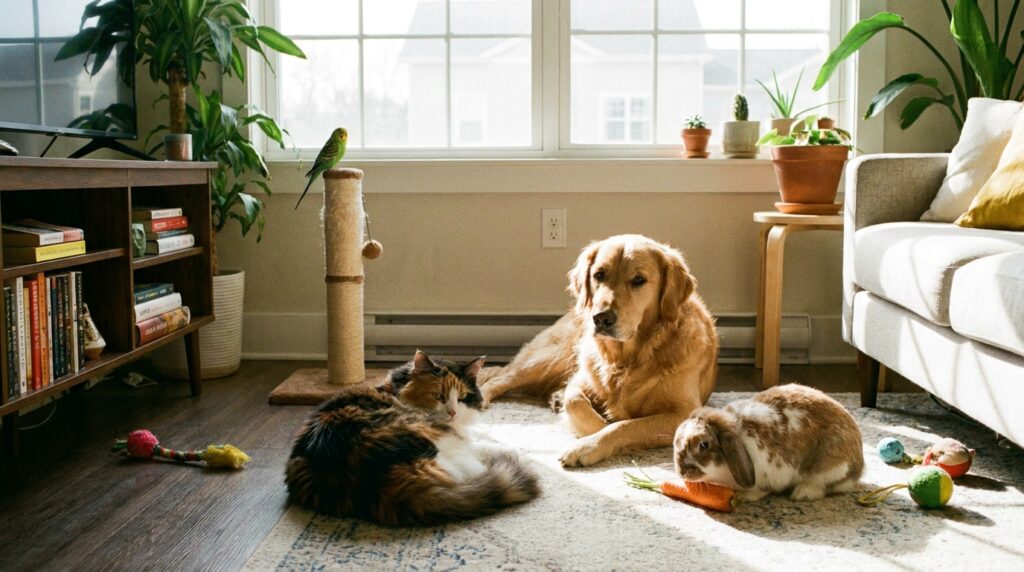
Sharing life with a pet can be deeply rewarding, but good pet ownership involves much more than providing food and affection. Animals depend on their owners for nutrition, exercise, preventive care, training, identification, safety, enrichment, and appropriate medical attention.
Dogs, cats, and other companion animals also have individual personalities and needs. A routine that works perfectly for one animal may not suit another. Responsible pet care therefore begins with understanding the species, breed or mix, age, health status, temperament, and environment of the individual animal.
- Learn About Your Pet Before Making Decisions
- Choose a Pet That Fits Your Lifestyle
- Prepare the Home Before Bringing a Pet In
- Create a Predictable Routine
- Feed According to Individual Needs
- Keep Fresh Water Available
- Exercise According to Ability
- Outdoor Adventures Require Preparation
- Be Extra Careful Around Fishing Equipment
- Mental Stimulation Matters
- Training Should Focus on Communication
- Reward Desired Behavior
- Socialization Requires Quality, Not Just Quantity
- Provide a Safe Resting Space
- Choose Pet Products Carefully
- Identification Is Essential
- Keep Microchip Details Current
- Use Collars and Harnesses Correctly
- Understand Normal Animal Appearance and Behavior
- Schedule Appropriate Veterinary Care
- Do Not Wait Too Long When a Pet Is Ill
- Watch for Behavioral Changes
- Maintain Dental Health
- Keep Nails at a Healthy Length
- Groom According to Coat Type
- Check Ears and Skin Regularly
- Protect Pets From Parasites
- Keep Household Toxins Secure
- Learn Which Foods Are Unsafe
- Manage Weight Carefully
- Adapt Care as Pets Age
- Make Travel Comfortable for Pets
- Secure Pets During Vehicle Travel
- Plan for Hot Weather
- Prepare for Cold Conditions
- Keep Pets Safe Around Water
- Teach Children How to Interact With Animals
- Supervise Introductions Between Pets
- Recognize Fear and Stress
- Prepare for Fireworks and Loud Events
- Create an Emergency Plan for Pets
- Choose Boarding and Pet Care Carefully
- Do Not Buy Pets Impulsively
- Consider Adoption Responsibly
- Do Not Use Appearance as the Only Breed Guide
- Make Time for Play
- Spend Quality Time Together
- Responsible Pet Ownership Is a Long-Term Commitment
Learn About Your Pet Before Making Decisions
Understanding normal behavior can make pet ownership considerably easier. Dogs, for example, communicate through posture, movement, vocalization, facial expressions, and behavior rather than words.
People researching dog behavior, breeds, and general canine topics may encounter resources such as Dogs Info while exploring broader information about dogs.
Learning what is normal for your pet makes it easier to recognize changes that may indicate stress, discomfort, boredom, or illness.
Choose a Pet That Fits Your Lifestyle
Appearance should not be the only consideration when selecting a pet. Energy level, adult size, grooming requirements, exercise needs, temperament, training demands, and expected lifespan all matter.
A highly active dog can become frustrated in a household that cannot provide enough exercise and mental stimulation, while another animal may be perfectly comfortable with a quieter lifestyle.
Mixed breeds can combine characteristics from different lineages. People interested in particular dog mixes may encounter resources such as The Pitsky while researching pet-related topics.
Prepare the Home Before Bringing a Pet In
A new pet needs a safe environment from the beginning.
Secure medications, cleaning products, electrical cords, potentially toxic plants, small objects that could be swallowed, and foods that are unsafe for animals. Check fences, gates, balconies, windows, and doors for escape risks.
Decide in advance where food, water, bedding, litter equipment where applicable, toys, and grooming supplies will be kept.
Create a Predictable Routine
Animals often respond well to predictable routines. Feeding, walks, play, rest, bathroom opportunities, and bedtime occurring within reasonably consistent patterns can make everyday life easier.
This does not mean every day must be identical. The goal is simply to provide enough predictability that the animal understands what to expect.
Feed According to Individual Needs
Pet nutrition should take account of species, age, size, activity level, and health circumstances.
Portion sizes matter because excess calories can gradually contribute to unhealthy weight gain. Treats should also be considered part of overall intake rather than something completely separate.
If a pet has allergies, digestive problems, chronic disease, or unusual nutritional needs, a veterinarian can provide individualized guidance.
Keep Fresh Water Available
Pets need access to appropriate fresh water. Bowls should be cleaned regularly and placed somewhere easy for the animal to reach.
Water requirements may increase during hot weather, exercise, nursing, or certain health conditions.
Sudden major changes in drinking behavior can sometimes deserve veterinary attention, particularly when accompanied by other changes.
Exercise According to Ability
Exercise supports physical health and can also reduce boredom.
However, appropriate exercise differs greatly between animals. Age, breed characteristics, fitness level, weather, injuries, and medical conditions can all influence what is suitable.
A young energetic dog may need considerably more activity than an older dog with mobility limitations.
Outdoor Adventures Require Preparation
Many owners enjoy bringing pets on hikes, camping trips, lakeside outings, and other outdoor activities.
People researching outdoor recreation may encounter resources such as Geek Fishing. When pets accompany outdoor activities, owners should plan for their safety as carefully as their own.
Carry appropriate water, monitor temperature, understand local leash requirements, and be cautious around wildlife, fishing equipment, hooks, lines, and unfamiliar water.
Be Extra Careful Around Fishing Equipment
Hooks, bait, fishing line, and tackle can pose serious hazards to pets.
Keep fishing equipment secured and do not allow animals to investigate baited hooks or discarded line. Fishing line can be difficult to see and may cause entanglement or injury.
If a pet swallows a hook or becomes seriously injured by fishing equipment, seek veterinary help rather than attempting risky removal without guidance.
Mental Stimulation Matters
Physical exercise alone may not satisfy an intelligent or energetic pet.
Training sessions, food puzzles, scent games, safe chew items, interactive play, and opportunities to explore new environments can provide mental enrichment.
Rotate activities periodically rather than leaving every toy available all the time.
Training Should Focus on Communication
Training teaches pets how to live safely within a human environment.
Useful skills for dogs may include responding to their name, coming when called, walking appropriately on a leash, waiting when necessary, and leaving potentially dangerous objects alone.
Short, consistent sessions are generally easier to maintain than occasional long training sessions.
Reward Desired Behavior
Training becomes clearer when pets understand which behavior earns a positive outcome.
Rewards can include food, toys, play, attention, or access to something the animal values.
Consistency between family members is also important. A pet can become confused when one person encourages a behavior that another person constantly discourages.
Socialization Requires Quality, Not Just Quantity
Socialization does not mean forcing an animal to interact with every person or pet it encounters.
The objective is helping the animal develop appropriate confidence around environments, sounds, surfaces, people, and other animals while respecting its comfort level.
Negative or overwhelming experiences can have lasting effects, so introductions should be managed thoughtfully.
Provide a Safe Resting Space
Pets need somewhere they can relax without constant interruption.
A bed, crate when appropriately introduced, quiet room, or other designated resting area can provide security.
Children should also learn to respect animals when they are sleeping, eating, or trying to move away from interaction.
Choose Pet Products Carefully
The pet market contains an enormous variety of beds, toys, bowls, leads, grooming products, clothing, carriers, and accessories.
People comparing pet products may encounter resources such as Pet Select Shop.
Select products according to safety and suitability rather than appearance alone. A toy appropriate for a small dog may be unsafe for a larger animal capable of destroying and swallowing parts of it.
Identification Is Essential
Even careful owners can experience an open gate, broken leash, frightened pet, or other unexpected escape.
Visible identification can make it easier for someone who finds an animal to contact the owner. People researching identification accessories may encounter resources such as Pet Tags Pro.
Identification tags should contain useful, current contact information and remain securely attached to an appropriate collar where suitable.
Keep Microchip Details Current
Where microchipping is available and appropriate, it can provide another layer of identification.
A microchip is useful only when registration information is accurate. Owners who move or change phone numbers should remember to update the associated contact details.
Local laws may also impose specific identification requirements for dogs or other animals.
Use Collars and Harnesses Correctly
Collars and harnesses should fit appropriately without being excessively tight or loose enough for an animal to escape.
Check fit periodically, particularly for growing puppies or animals whose body weight changes.
Inspect worn leads, clips, buckles, and harnesses before they fail unexpectedly.
Understand Normal Animal Appearance and Behavior
Observing different animals can help people appreciate the enormous variation between breeds, species, coat types, body shapes, and expressions.
People interested in animal imagery and general animal topics may encounter resources such as Animals Photos.
Photographs can be enjoyable and educational, but an animal’s appearance alone does not reveal its temperament, health status, or suitability as a household pet.
Schedule Appropriate Veterinary Care
Veterinary care is an important part of responsible ownership.
People researching veterinary topics may encounter resources such as Dr Fox Vet. General online material can help owners understand terminology, but an actual veterinarian is better positioned to assess an individual animal’s health.
Routine care requirements vary according to species, age, location, lifestyle, and medical history.
Do Not Wait Too Long When a Pet Is Ill
Animals cannot clearly explain where they hurt or how severe a symptom feels.
Changes such as unusual weakness, repeated vomiting, breathing difficulty, collapse, seizures, significant bleeding, inability to urinate, severe injury, or suspected poisoning can require urgent veterinary attention.
When uncertain whether a situation is an emergency, contacting a veterinarian or emergency veterinary service is safer than relying entirely on internet searches.
Watch for Behavioral Changes
Behavior can provide clues about health.
A normally social pet suddenly hiding, an active dog refusing to move, unusual aggression, loss of appetite, or major sleep changes may indicate discomfort, stress, or illness.
Behavioral changes should be considered alongside the animal’s overall condition rather than dismissed automatically as stubbornness.
Maintain Dental Health
Oral health is easy to overlook because problems can develop gradually.
Depending on the animal, veterinary professionals may recommend particular dental-care routines or products.
Persistent bad breath, difficulty eating, bleeding gums, broken teeth, or obvious mouth pain deserve professional evaluation.
Keep Nails at a Healthy Length
Overgrown nails can affect comfort and movement.
Some animals naturally wear nails down through activity while others require regular trimming.
Owners who are uncomfortable trimming nails can ask a veterinary clinic or professional groomer for assistance.
Groom According to Coat Type
Different coats require different maintenance.
Regular brushing can help prevent tangles, remove loose fur, and provide an opportunity to notice skin changes, lumps, parasites, or injuries.
Some breeds require professional grooming at regular intervals, while others need relatively simple home maintenance.
Check Ears and Skin Regularly
Owners do not need to perform a medical examination every day, but routine handling can make changes easier to notice.
Redness, persistent scratching, unusual odor, discharge, swelling, sores, or hair loss may deserve attention.
Avoid placing unapproved products inside ears or on irritated skin without appropriate guidance.
Protect Pets From Parasites
Fleas, ticks, worms, and other parasites vary according to location and lifestyle.
Veterinary professionals can recommend preventive approaches appropriate to the individual animal and geographic area.
Do not assume that every product intended for one species is safe for another.
Keep Household Toxins Secure
Many ordinary household products can be dangerous to pets.
Medications, cleaning products, pest-control products, chemicals, and certain foods should be stored securely.
If poisoning is suspected, seek professional veterinary guidance promptly and provide information about the substance and approximate exposure if known.
Learn Which Foods Are Unsafe
Human food is not automatically safe for animals.
Different species metabolize substances differently, so foods that people consume comfortably may be harmful to pets.
Before sharing unfamiliar foods, verify their safety through reliable veterinary guidance.
Manage Weight Carefully
Body weight affects mobility and overall health.
Owners sometimes underestimate calorie intake because treats, table scraps, and training rewards are not counted alongside regular meals.
A veterinarian can help determine an appropriate body condition and feeding strategy for an individual animal.
Adapt Care as Pets Age
Senior pets may require changes in exercise, nutrition, bedding, home layout, and healthcare.
Stairs or slippery floors can become more difficult for animals with reduced mobility, while hearing or vision changes may affect behavior.
Regular observation becomes particularly valuable because owners often notice gradual changes before anyone else.
Make Travel Comfortable for Pets
Travel requires additional preparation when animals are involved.
Confirm pet policies for accommodation and transportation, carry sufficient food and medication, and keep identification information current.
Some animals enjoy travel while others find it highly stressful, so the decision to bring a pet should consider its individual temperament.
Secure Pets During Vehicle Travel
Animals moving freely around a vehicle can distract the driver and may be at greater risk during sudden braking or a collision.
Use an appropriate carrier, secured crate, or suitable restraint depending on the animal and local requirements.
Never leave an animal in a vehicle where temperature can become dangerous.
Plan for Hot Weather
Animals can overheat, particularly during strenuous activity or high temperatures.
Schedule exercise during cooler parts of the day when necessary, provide access to water and shade, and be cautious with hot pavement.
Signs of heat-related illness require immediate attention.
Prepare for Cold Conditions
Cold tolerance varies considerably between animals.
Coat type, size, age, health, wind, moisture, and duration of exposure all matter.
Outdoor time should be adjusted according to conditions and the individual animal rather than assuming every dog naturally tolerates cold weather.
Keep Pets Safe Around Water
Not every dog is a strong swimmer, and even capable swimmers can become tired or encounter currents.
Supervise animals around pools, lakes, rivers, and boats. Suitable flotation equipment may be appropriate for some activities.
Provide safe access out of swimming pools so an animal does not become trapped.
Teach Children How to Interact With Animals
Children should learn that pets are living animals rather than toys.
They should avoid pulling tails or ears, climbing on animals, disturbing them while eating, or chasing an animal that is trying to move away.
Adult supervision is especially important with young children.
Supervise Introductions Between Pets
Adding another animal to a household requires patience.
Do not assume two pets will immediately become friends. Initial interactions should be controlled, and each animal should have access to its own resources and safe space.
Professional behavioral guidance may be valuable when introductions become difficult.
Recognize Fear and Stress
Animals can experience stress in unfamiliar environments, around loud noises, during veterinary visits, or when routines change.
Signs vary between individuals and species but may include hiding, pacing, trembling, vocalization, avoidance, changes in appetite, or unusual behavior.
Identifying the trigger can help owners make the environment more manageable.
Prepare for Fireworks and Loud Events
Fireworks, storms, and other loud events can cause extreme fear in some animals.
Keep pets securely indoors where appropriate, ensure identification is current, and provide a familiar safe area.
For animals with severe noise anxiety, discuss management options with a veterinarian before the event rather than waiting until panic begins.
Create an Emergency Plan for Pets
Emergency planning should include animals.
Keep carriers or leads accessible and maintain a basic supply of necessary food, medication, water, and identification information.
Know where pets could temporarily stay if the household needed to leave the property unexpectedly.
Choose Boarding and Pet Care Carefully
When owners travel without their animals, care arrangements should be made in advance.
Whether using a boarding facility, professional sitter, friend, or relative, provide clear feeding, medication, exercise, and emergency instructions.
Leave veterinary contact information and make sure the caregiver understands any important health or behavioral issues.
Do Not Buy Pets Impulsively
A pet can represent a commitment lasting many years.
Food, veterinary care, grooming, training, equipment, boarding, and housing restrictions all need consideration before an animal enters the household.
Research thoroughly and make sure everyone responsible for care understands the commitment.
Consider Adoption Responsibly
Adoption can provide homes for animals in need, but it should still involve careful matching.
Ask about known health history, behavior, exercise needs, and compatibility with children or other pets where relevant.
A thoughtful match benefits both the household and the animal.
Do Not Use Appearance as the Only Breed Guide
Two dogs that look similar can behave very differently.
Breed tendencies may provide context, but socialization, health, environment, training, and individual personality all contribute to behavior.
Owners should respond to the actual animal in front of them rather than expecting it to perfectly match a breed description.
Make Time for Play
Play can strengthen the relationship between pets and owners while providing physical and mental activity.
Different pets prefer different games, so experiment with safe activities and observe what the animal enjoys.
Stop play if an animal becomes overly aroused, exhausted, or uncomfortable.
Spend Quality Time Together
Pets often value ordinary interaction more than complicated accessories.
Walking, training, grooming, play, or simply sitting together can contribute to a strong relationship.
Regular positive interaction also helps owners notice changes in behavior or physical condition earlier.
Responsible Pet Ownership Is a Long-Term Commitment
Good pet care is built through consistent attention rather than occasional effort.
Provide appropriate food and water, safe exercise, mental stimulation, identification, grooming, training, veterinary care, and a secure environment. Observe changes carefully and seek professional help when health or behavior concerns exceed what can reasonably be managed at home.
Most importantly, remember that animals depend on humans to make decisions in their best interests. Responsible ownership means adapting as the animal grows, ages, and changes rather than expecting the same routine to remain suitable forever.