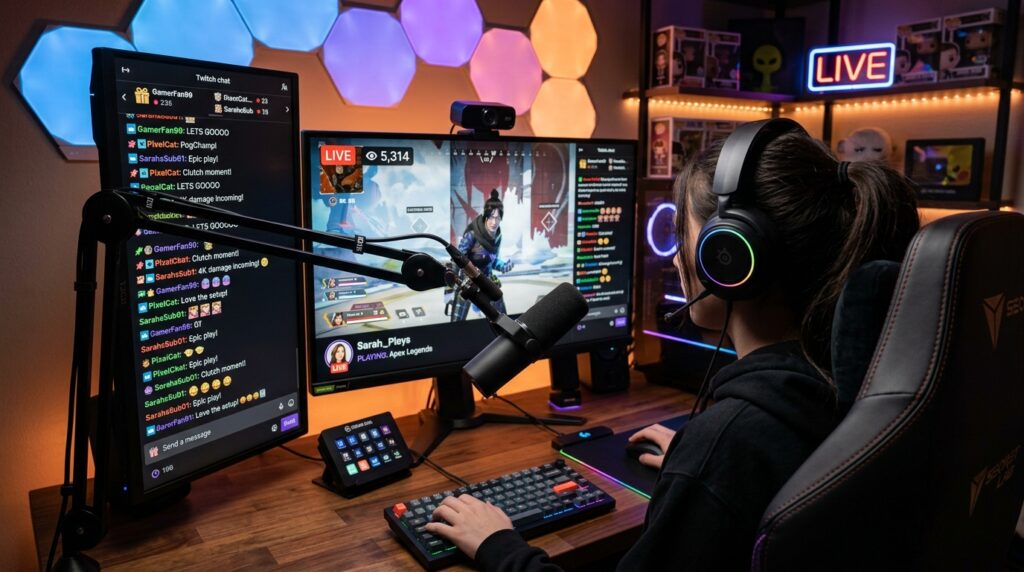
Gaming has evolved far beyond a simple form of entertainment. Today, games can offer enormous open worlds, competitive multiplayer environments, creative building systems, complex stories, strategic challenges, and communities involving players from around the world.
At the same time, the number of available games, platforms, accessories, updates, and online communities can make gaming feel surprisingly complicated. Players may spend significant time deciding what to play, optimizing settings, learning mechanics, or trying to keep up with new releases.
A better gaming experience does not necessarily require the most expensive hardware or hundreds of games. Understanding personal preferences, choosing games carefully, improving gradually, and maintaining a balanced approach can make gaming considerably more rewarding.
- Understand What Type of Gamer You Are
- Explore Different Gaming Genres
- Choose Games Based on Gameplay, Not Hype
- Do Not Ignore Older Games
- Learn the Basic Mechanics First
- Why Sandbox Games Remain Popular
- Creativity Can Be as Important as Competition
- Set Personal Goals in Open-World Games
- Learn Through Experimentation
- Improve Through Deliberate Practice
- Understand Your Game Settings
- Performance Matters More Than Maximum Graphics
- Keep Gaming Hardware Clean
- Use a Comfortable Gaming Setup
- Audio Can Transform the Experience
- Play Multiplayer Games With Communication in Mind
- Be a Better Online Teammate
- Protect Your Gaming Accounts
- Be Careful With Mods and Downloads
- Back Up Important Game Saves
- Use Guides Without Letting Them Play the Game for You
- Understand In-Game Purchases
- Do Not Let Limited-Time Offers Create Pressure
- Explore Single-Player Games
- Try Cooperative Gaming
- Gaming Can Encourage Problem-Solving
- Creative Games Can Support Long-Term Projects
- Take Breaks During Long Sessions
- Balance Gaming With Other Responsibilities
- Gaming Communities Can Add Another Dimension
- Replay Games Differently
- Do Not Judge Games Only by Playtime
- Build a Game Library You Actually Play
- Remember Why You Started Gaming
- Make Gaming a Better Experience
Understand What Type of Gamer You Are
Not everyone enjoys games for the same reason. Some players love competition, while others prefer exploration, storytelling, creativity, problem-solving, or simply relaxing after a busy day.
Understanding these preferences makes choosing games easier. Someone who enjoys building and experimentation may have little interest in highly competitive shooters. Similarly, a player who loves fast multiplayer matches may become impatient with a slow narrative adventure.
Instead of playing something only because it is currently popular, consider whether its fundamental gameplay actually matches your interests.
Explore Different Gaming Genres
One of the best ways to discover new gaming experiences is to explore genres outside your usual choices.
Action games can emphasize reflexes and movement, while strategy games reward planning and decision-making. Role-playing games may focus on characters, progression, and exploration. Simulation games can recreate real or imagined systems, while survival and sandbox games often provide considerable freedom.
Players interested in discovering broader gaming discussions may encounter independent resources such as Fiber Gaming while exploring games, gaming culture, and related topics.
Trying different genres can reveal preferences that would never become apparent by repeatedly playing the same type of game.
Choose Games Based on Gameplay, Not Hype
Marketing campaigns, trailers, influencers, and social media can create enormous excitement around upcoming games. However, popularity does not guarantee that a particular game will suit every player.
Before purchasing, look at actual gameplay and understand the core mechanics. Consider whether the game is primarily single-player or multiplayer, whether it requires a permanent internet connection, and how much time is normally required to experience its major features.
Waiting for reliable information after release can sometimes prevent disappointing purchases.
Do Not Ignore Older Games
Gaming culture naturally focuses on new releases, but older games can provide excellent experiences at significantly lower prices.
A game’s graphics may age more quickly than its mechanics, level design, storytelling, or artistic direction. Many older titles also benefit from years of updates and community-created guides.
Players who constantly chase new releases may therefore overlook some of the most interesting games available.
Learn the Basic Mechanics First
Many games introduce several systems simultaneously. New players sometimes try to understand everything immediately and become overwhelmed.
Start with the fundamental mechanics. Learn movement, combat, inventory management, building, resource collection, or whatever systems are central to the game.
Advanced strategies become much easier once basic controls are automatic.
This principle applies particularly well to games that provide players with substantial creative freedom.
Why Sandbox Games Remain Popular
Traditional games frequently provide a predefined path, but sandbox games allow players to create their own objectives.
One person may focus on exploration while another builds structures, experiments with mechanics, collects resources, or plays collaboratively with friends.
This freedom can make a game enjoyable for many years because the player’s creativity becomes part of the experience.
Creativity Can Be as Important as Competition
Gaming is sometimes discussed almost entirely in terms of winning and losing. Yet some of the most popular games emphasize creativity rather than competition.
Building environments allow players to experiment with architecture, design, resource management, automation, and collaborative projects.
Minecraft is one of the most recognizable examples of this approach. Players interested in the game and its surrounding community may encounter resources such as Love Minecraft while exploring Minecraft-related content.
Creative games can remain interesting because players continuously invent new objectives instead of relying entirely on objectives created by developers.
Set Personal Goals in Open-World Games
Large games can sometimes feel overwhelming because they provide too many possible activities.
Creating personal objectives can add structure. A player might decide to complete a particular storyline, explore a region, collect certain items, improve a character build, construct a base, or learn a difficult mechanic.
Small objectives provide a sense of progress without requiring every available activity to be completed.
Learn Through Experimentation
Guides can be helpful, but immediately searching for the optimal solution to every problem can remove some of the discovery that makes games enjoyable.
Experiment first when possible. Try different equipment, strategies, routes, building techniques, or character combinations.
If progress becomes frustrating rather than enjoyable, then consulting a guide can provide the missing information.
This balance preserves discovery while preventing unnecessary frustration.
Improve Through Deliberate Practice
Players often assume that simply playing for many hours automatically produces improvement. Experience certainly helps, but focused practice can be more effective.
If aiming is the weakness in a competitive game, practice aiming specifically. If decision-making is the problem, review situations where poor choices repeatedly occur.
For strategy games, examine why particular plans fail rather than immediately beginning another match.
Identifying one weakness at a time makes improvement more manageable.
Understand Your Game Settings
Default settings are designed to work for many players, but they are not necessarily ideal for everyone.
Experiment with sensitivity, field of view, graphics settings, audio levels, key bindings, controller layouts, and accessibility options.
Competitive players may prioritize stable frame rates and clear visibility, while players focused on cinematic single-player experiences may prefer higher graphical quality.
The best configuration depends on the game, hardware, and personal preference.
Performance Matters More Than Maximum Graphics
Running every graphical option at its highest setting can look impressive, but inconsistent performance may reduce enjoyment.
A stable frame rate often provides a smoother experience than maximum visual quality with frequent drops or stuttering.
Settings such as shadows, reflections, anti-aliasing, texture quality, and resolution can affect performance differently. Adjusting individual settings allows players to find a better balance between image quality and responsiveness.
Keep Gaming Hardware Clean
Gaming PCs and consoles require basic maintenance. Dust accumulation can reduce airflow and contribute to higher temperatures.
Keep ventilation areas clear and follow appropriate manufacturer guidance when cleaning hardware.
Controllers, keyboards, mice, and headsets also benefit from regular cleaning, particularly because they are handled frequently.
Use a Comfortable Gaming Setup
A good gaming setup is not defined entirely by RGB lighting or expensive accessories. Comfort matters considerably more during long sessions.
Monitor position, chair height, desk arrangement, keyboard placement, and controller posture can all affect comfort.
Players should also take regular breaks rather than remaining in exactly the same position for many hours.
Audio Can Transform the Experience
Game audio is not merely decorative. Sound can communicate direction, danger, atmosphere, environmental information, and narrative details.
In competitive games, recognizing footsteps or other directional cues can be particularly useful. In story-driven titles, music and environmental audio can substantially increase immersion.
A good headset or speaker system can improve the experience, but correct audio settings remain important regardless of equipment.
Play Multiplayer Games With Communication in Mind
Team-based games frequently reward communication as much as mechanical skill.
Clear, concise information about objectives, opponents, resources, or strategy can help a team coordinate effectively.
Communication should remain constructive. Constant arguments and insults rarely improve performance and can make the game unpleasant for everyone involved.
Be a Better Online Teammate
Multiplayer games connect people with different experience levels, personalities, and communication styles.
Good teammates understand their role, share useful information, avoid intentionally disrupting matches, and recognize that mistakes happen.
Competitive gaming becomes considerably more enjoyable when competition remains focused on the game rather than personal hostility.
Protect Your Gaming Accounts
Gaming accounts can contain purchased games, digital items, personal information, and payment details, making them attractive targets for attackers.
Use strong, unique passwords and enable multi-factor authentication when supported.
Be suspicious of messages promising free currency, rare items, account upgrades, or unexpected prizes. Fake login pages are commonly used to steal account credentials.
Be Careful With Mods and Downloads
Mods can extend the life of games by introducing new content, visual improvements, mechanics, maps, and customization.
However, downloading executable files from unknown sources creates security risks.
Use reputable communities and platforms where possible, read installation instructions carefully, and back up important saves before making major modifications.
Back Up Important Game Saves
Losing a save after dozens or hundreds of hours can be extremely frustrating.
Cloud synchronization can provide protection, but players should understand how their particular platform handles saved data.
For games with significant local worlds, characters, or custom content, occasional manual backups can provide additional protection where supported.
Use Guides Without Letting Them Play the Game for You
Online guides can explain complicated mechanics, hidden items, difficult bosses, crafting systems, or confusing quests.
However, following a complete walkthrough from the beginning can turn exploration into a sequence of instructions.
Consider using guides selectively. Search for help when stuck rather than automatically checking every answer before attempting a challenge.
Understand In-Game Purchases
Many modern games include optional purchases such as cosmetic items, expansions, season passes, virtual currencies, or additional content.
Before spending money, understand exactly what is being purchased and whether it affects gameplay or is purely cosmetic.
Small repeated purchases can accumulate into a surprisingly large amount, so establishing a gaming budget can be useful.
Do Not Let Limited-Time Offers Create Pressure
Some games use rotating shops, seasonal rewards, and limited-time events to encourage frequent engagement.
These systems can be enjoyable, but players should recognize when fear of missing out begins to turn entertainment into an obligation.
Missing a cosmetic item or event rarely prevents someone from enjoying the underlying game.
Explore Single-Player Games
Multiplayer games dominate many gaming discussions, but single-player titles offer a different experience.
They allow players to progress at their own pace, pause when necessary, explore without competitive pressure, and become more deeply involved in storytelling.
Alternating between competitive multiplayer and relaxed single-player games can also prevent gaming from feeling repetitive.
Try Cooperative Gaming
Cooperative games allow friends or family members to work toward shared objectives rather than compete directly.
These experiences can involve solving puzzles, surviving difficult environments, building worlds, completing missions, or managing resources together.
Good cooperative games often create memorable moments precisely because success depends on communication and teamwork.
Gaming Can Encourage Problem-Solving
Many games require players to observe systems, identify patterns, manage limited resources, and adjust strategies when an approach fails.
Puzzle games make this particularly obvious, but similar problem-solving appears in strategy games, survival games, simulations, and even action titles.
The most interesting challenges often provide enough information for players to discover solutions without making the answer immediately obvious.
Creative Games Can Support Long-Term Projects
Some games remain interesting because players can create projects that take days, weeks, or even months.
A large virtual city, automated system, survival base, custom map, or collaborative world can become an ongoing hobby rather than a short gaming session.
These projects also encourage planning. Players must decide what resources are required, how different parts will work together, and how the project can be improved over time.
Take Breaks During Long Sessions
When a game is particularly engaging, several hours can pass quickly.
Regular breaks provide an opportunity to stand, move, rest the eyes, drink water, and reset concentration.
Breaks can even improve gameplay. Returning after a short pause may make it easier to solve a difficult puzzle or recognize mistakes that were becoming repetitive.
Balance Gaming With Other Responsibilities
Gaming works best when it remains an enjoyable part of life rather than interfering with essential responsibilities.
Work, education, sleep, relationships, physical activity, and everyday obligations still require time.
If a gaming session has a natural stopping point, such as the end of a match or mission, using that point to take a break can make time management easier.
Gaming Communities Can Add Another Dimension
A game does not always end when the application closes. Online communities discuss strategies, share builds, create modifications, organize tournaments, publish artwork, and collaborate on projects.
These communities can be useful sources of inspiration and assistance, particularly for complex games.
As with any online environment, players should still protect personal information and be selective about the communities they join.
Replay Games Differently
A second playthrough does not need to repeat the first one.
Players can choose different characters, difficulty settings, strategies, story decisions, builds, or self-imposed challenges.
Sandbox games naturally encourage this experimentation because each new world or project can develop differently.
Do Not Judge Games Only by Playtime
A 100-hour game is not automatically better value than a 15-hour game.
Quality, enjoyment, originality, replayability, and memorable experiences matter alongside duration.
Some short games provide tightly designed experiences with very little filler, while longer games may appeal to players who enjoy gradual progression and exploration.
Build a Game Library You Actually Play
Digital sales can make it tempting to purchase games simply because they are heavily discounted.
Before buying, consider whether you genuinely expect to play the game soon. A cheap game that remains untouched indefinitely provides little practical value.
Keeping a smaller list of games you genuinely want to experience can reduce the feeling of having an overwhelming backlog.
Remember Why You Started Gaming
Competitive rankings, achievements, daily challenges, collectibles, and progression systems can provide useful goals, but they can also distract from the fundamental reason people play games: enjoyment.
There is nothing wrong with taking competition seriously or working toward difficult achievements. The important question is whether the experience still feels rewarding.
If a particular game begins feeling entirely like an obligation, trying another genre or taking a temporary break can restore perspective.
Make Gaming a Better Experience
Modern gaming offers an extraordinary range of experiences. Players can compete internationally, explore enormous fictional worlds, solve complex puzzles, experience interactive stories, construct detailed environments, or simply spend an evening playing casually with friends.
Getting more from gaming does not require following every release or owning every new piece of hardware. Learn what kinds of games you genuinely enjoy, understand their mechanics, maintain your equipment and accounts, experiment with different experiences, and give yourself permission to play at your own pace.
Ultimately, the best gaming experience is not determined by the size of a library, a competitive rank, or the number of hours recorded. It is determined by whether the time spent playing remains interesting, memorable, creative, and enjoyable.