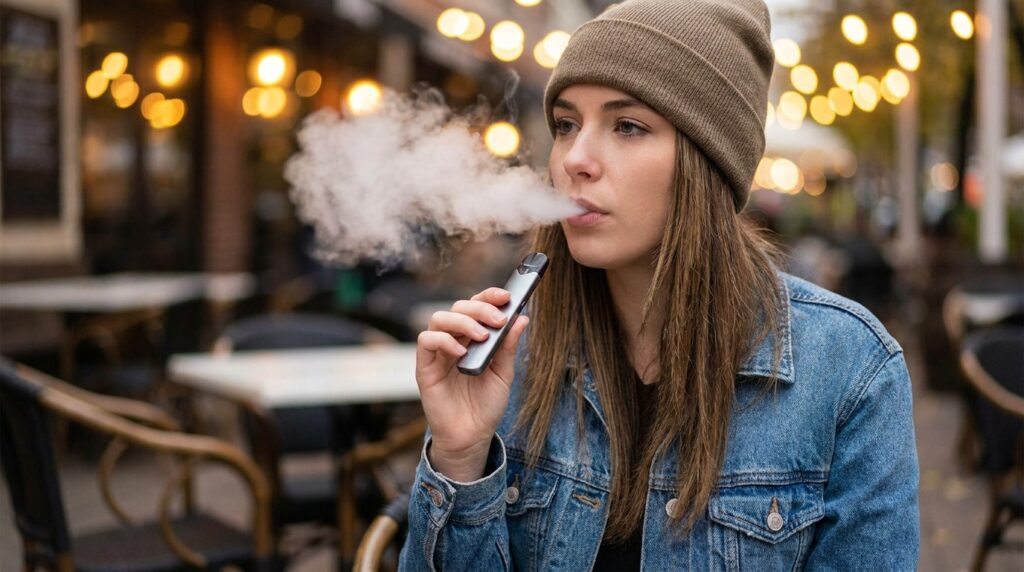
Vaping has become a widely discussed public-health and consumer topic, particularly among adults who already use nicotine products. At the same time, the terminology surrounding vaping can be confusing. Devices differ in design, liquids contain different ingredients and nicotine concentrations, regulations vary by location, and online claims about relative risks are not always presented with appropriate context.
It is therefore important to approach the subject factually. Vaping is not risk-free, nicotine can be addictive, and people who do not currently use nicotine generally should not start. Adults researching vaping should also distinguish between information intended to explain products and claims that encourage unnecessary nicotine use.
- What Is Vaping?
- Vaping Is Not Risk-Free
- Nicotine Can Be Addictive
- People Who Do Not Use Nicotine Should Not Start
- Vaping Products Should Never Be Marketed Toward Minors
- Understand What Is in Vape Liquid
- Nicotine Concentration Matters
- Device Type Can Affect the Experience
- Battery Safety Is Important
- Do Not Improvise Battery Repairs
- Charging Practices Matter
- Keep E-Liquids Away From Children
- Pets Need Protection Too
- Avoid Unregulated or Unknown Products
- Do Not Assume Flavor Means Safety
- Watch for Changes in Breathing or Health
- People With Existing Health Conditions Should Be Particularly Careful
- Pregnancy and Nicotine Require Special Caution
- Secondhand Aerosol Deserves Consideration
- Indoor Vaping Rules Vary
- Traveling With Vape Devices Requires Preparation
- Vape Laws Differ Between Countries
- Age Restrictions Must Be Respected
- Do Not Share Devices Casually
- Keep Devices Clean
- Leaking Devices Should Be Addressed
- Understand Replacement Components
- Avoid Unnecessary Device Modification
- Disposable Devices Create Waste
- Environmental Impact Should Not Be Ignored
- Vaping and Smoking Are Different, but Comparison Requires Context
- Dual Use May Maintain Nicotine Dependence
- Quitting Nicotine Can Be Difficult
- Set a Clear Goal If You Want to Quit
- Do Not Replace Evidence With Anecdotes
- Be Skeptical of Absolute Claims
- Marketing and Health Information Are Not the Same
- Keep Vaping Away From Schools and Youth Spaces
- Respect People Who Do Not Want Exposure
- Know When a Device Should Be Replaced
- Read Instructions Instead of Guessing
- Responsible Information Matters
- Make Health the Priority
What Is Vaping?
Vaping generally involves an electronic device that heats a liquid to create an aerosol that the user inhales. Unlike a conventional cigarette, the process does not rely on burning tobacco in the same way.
Devices vary significantly in size, power, refill method, battery capacity, and intended use. Adults researching the broader vaping landscape may encounter resources such as Geekay Vapes while learning about vaping-related terminology and products.
The existence of different device categories can make comparison difficult, so users should understand what a particular device contains and how it operates before using it.
Vaping Is Not Risk-Free
One of the most important points is that vaping should not be interpreted as harmless.
Users can be exposed to nicotine and other substances through the aerosol. The exact exposure can vary according to the liquid, device, temperature, frequency of use, and other factors.
People with questions about personal health effects should seek appropriate medical guidance rather than relying entirely on marketing material or social-media claims.
Nicotine Can Be Addictive
Many vaping products contain nicotine, a substance capable of producing dependence.
Regular exposure can make stopping difficult for some users, and the amount consumed may be harder to estimate than expected because devices differ in concentration, delivery, and usage patterns.
Adults who already use nicotine should pay attention to how frequently they vape rather than assuming that a smaller device automatically means lower overall nicotine intake.
People Who Do Not Use Nicotine Should Not Start
Vaping should not be treated as a lifestyle accessory for people who have never used nicotine.
Someone who does not smoke or otherwise use nicotine has no need to introduce nicotine exposure merely because vaping products exist or because particular flavors, packaging, or devices appear attractive.
This is especially important when discussing vaping around younger people.
Vaping Products Should Never Be Marketed Toward Minors
Nicotine products are inappropriate for children and teenagers.
Adults should store devices and liquids securely and avoid leaving them where children can access them.
Marketing, packaging, or online content that makes nicotine use appear harmless or primarily entertainment-focused can also create misleading impressions among younger audiences.
Understand What Is in Vape Liquid
Vape liquids can contain several components, which may include carriers, flavoring ingredients, and nicotine depending on the product.
Exact formulations vary, so users should not assume two liquids are equivalent simply because they have similar names or flavors.
Products from unknown or unverified sources may present additional concerns because users may have less reliable information about ingredients and manufacturing standards.
Nicotine Concentration Matters
Different liquids can contain substantially different nicotine concentrations.
A user moving between products without checking concentration could unintentionally change nicotine intake.
Labels should therefore be read carefully. If labeling is missing, unclear, or inconsistent, that itself is a reason for caution.
Device Type Can Affect the Experience
Electronic vaping devices are not all identical.
Some systems are disposable, while others use replaceable pods, refillable tanks, or other configurations. Power output and airflow can also differ.
These differences can influence vapor production, battery use, liquid consumption, and the way nicotine is delivered.
Battery Safety Is Important
Vaping devices contain batteries, and battery misuse can create fire or injury risks.
Users should follow manufacturer instructions, use compatible chargers, avoid obviously damaged batteries, and stop using equipment that becomes unusually hot or physically deformed.
Devices should not be exposed unnecessarily to extreme heat, water, or physical damage.
Do Not Improvise Battery Repairs
Trying to repair damaged lithium-ion batteries without appropriate expertise can be dangerous.
If a device or battery is visibly damaged, swelling, leaking, or behaving abnormally, continued use may increase risk.
Replacement or professional assessment is generally safer than improvised modification.
Charging Practices Matter
Electronic devices should be charged according to the manufacturer’s guidance.
Avoid using incompatible charging equipment merely because the connector appears to fit. Charging damaged equipment or leaving questionable batteries in use can create unnecessary hazards.
Users should also inspect cables periodically for obvious damage.
Keep E-Liquids Away From Children
Nicotine-containing liquid can be hazardous if swallowed or otherwise improperly exposed.
Bottles should be closed securely and stored somewhere children and pets cannot reach.
If accidental exposure occurs, appropriate emergency or poison-control guidance should be sought promptly according to local resources.
Pets Need Protection Too
Pets can investigate unfamiliar objects, chew containers, or lick spills.
Vape liquids and devices should therefore be stored securely away from animals as well as children.
Any suspected exposure should be taken seriously and appropriate veterinary guidance should be sought.
Avoid Unregulated or Unknown Products
A product that is unusually cheap or sold without clear labeling may expose users to additional uncertainty.
Regulations vary by country, but buyers should understand whether products comply with applicable local requirements.
Counterfeit or poorly documented products can also make it difficult to know exactly what is being used.
Do Not Assume Flavor Means Safety
Familiar food-like flavors can create the impression that a product is harmless.
However, an ingredient being suitable for one form of consumption does not automatically establish that inhaling it repeatedly is harmless.
Health decisions should not be based solely on flavor names or pleasant smells.
Watch for Changes in Breathing or Health
Persistent coughing, chest discomfort, shortness of breath, or other concerning symptoms should not simply be ignored.
Because many conditions can produce respiratory symptoms, an online article cannot determine the cause for an individual.
Significant or persistent symptoms warrant appropriate medical assessment.
People With Existing Health Conditions Should Be Particularly Careful
Individuals with respiratory, cardiovascular, pregnancy-related, or other relevant health concerns should not assume general vaping information applies safely to them.
Personal medical circumstances can change the risk calculation substantially.
Questions involving individual conditions are better discussed with qualified healthcare professionals.
Pregnancy and Nicotine Require Special Caution
Nicotine exposure during pregnancy is a significant health concern.
Someone who is pregnant or planning pregnancy and currently uses nicotine should seek professional medical guidance about cessation and appropriate support.
Vaping should not be presented as automatically safe during pregnancy.
Secondhand Aerosol Deserves Consideration
Using a vaping device around other people can expose them to aerosol they did not choose to inhale.
Users should respect smoke- and vape-free environments and avoid vaping around children, pregnant individuals, or people who prefer not to be exposed.
Local laws may also restrict where vaping is permitted.
Indoor Vaping Rules Vary
Some workplaces, restaurants, hotels, transportation systems, and public spaces treat vaping similarly to smoking.
Travelers should not assume that vaping is allowed simply because no traditional cigarette is involved.
Check local rules before using a device in indoor or restricted environments.
Traveling With Vape Devices Requires Preparation
Airline and airport rules may govern how batteries, devices, and liquids can be transported.
Regulations can vary by country and carrier, so travelers should check current official requirements before departure.
Do not rely on an old travel post when rules concerning batteries or nicotine products may have changed.
Vape Laws Differ Between Countries
Some jurisdictions permit vaping products under specific regulations, while others impose substantial restrictions or prohibitions.
Travelers should verify whether importing, possessing, or using a vaping device is legal at the destination before packing one.
Assuming that laws are identical to those at home can create unnecessary legal problems.
Age Restrictions Must Be Respected
Where vaping products are legally sold, age restrictions may apply.
Retailers and consumers should follow applicable laws rather than treating age verification as optional.
Restrictions are intended in part to reduce youth access to nicotine products.
Do Not Share Devices Casually
Sharing mouthpieces can raise hygiene concerns because devices come into direct contact with the mouth.
Users should maintain their own equipment and follow appropriate cleaning instructions.
Keep Devices Clean
Reusable vaping equipment may accumulate condensation, residue, or liquid over time.
Cleaning should follow manufacturer guidance and should not involve immersing electrical components unless explicitly designed for that purpose.
Regular inspection also makes leaks or damage easier to notice.
Leaking Devices Should Be Addressed
Persistent leakage can indicate incorrect assembly, damaged components, incompatible parts, or another problem.
Rather than continually wiping liquid away and ignoring the issue, users should identify the cause according to manufacturer instructions.
A seriously damaged device should not continue to be used merely because it still powers on.
Understand Replacement Components
Reusable devices may rely on coils, pods, tanks, or other replaceable components.
Using incompatible parts can affect both performance and safety.
Check manufacturer specifications rather than assuming components that look similar are interchangeable.
Avoid Unnecessary Device Modification
Modifying electronic devices outside their intended specifications can introduce risks involving batteries, heat, or electrical performance.
Advanced technical experimentation should not be treated casually, particularly when high-current batteries are involved.
Disposable Devices Create Waste
Disposable vaping products combine electronics, batteries, plastics, and other materials.
Throwing battery-containing devices into ordinary waste may be inappropriate depending on local disposal rules.
Users should check whether electronic or battery recycling programs accept these products.
Environmental Impact Should Not Be Ignored
Convenience products can generate substantial waste when used repeatedly.
Consumers should consider packaging, batteries, device lifespan, and appropriate disposal alongside price and convenience.
Vaping and Smoking Are Different, but Comparison Requires Context
Vaping and combustible cigarette smoking involve different exposure pathways and should not simply be described as identical behaviors.
However, saying that two products differ does not mean either is harmless.
Adults seeking to reduce or stop cigarette use should consider evidence-based cessation guidance rather than assuming every vaping pattern will automatically achieve that goal.
Dual Use May Maintain Nicotine Dependence
Some adults use both cigarettes and vaping products.
If the goal is to stop smoking, continuing both products indefinitely may not represent the intended outcome.
People who want to quit nicotine can discuss structured cessation options with appropriate health professionals.
Quitting Nicotine Can Be Difficult
Dependence can make withdrawal uncomfortable and can produce strong urges to resume use.
Difficulty quitting should not be interpreted as personal weakness; it reflects the way addictive substances can affect behavior and physiology.
Structured support may make cessation more manageable for some people.
Set a Clear Goal If You Want to Quit
An adult who wants to stop vaping can begin by understanding current usage patterns.
Notice when and why the device is used, such as during stress, social situations, driving, work breaks, or after meals.
Recognizing triggers can make it easier to create alternatives and plan for difficult moments.
Do Not Replace Evidence With Anecdotes
Personal experiences are valuable for understanding what an individual encountered, but they cannot establish what will happen to everyone.
A single story claiming that vaping caused no problems—or solved every problem—should not be treated as universal evidence.
Health information deserves more careful evaluation.
Be Skeptical of Absolute Claims
Statements such as “completely safe,” “zero risk,” or other absolute assurances should be treated cautiously.
Health science often involves degrees of risk, uncertainty, differences between products, and differences between individuals.
Responsible information should acknowledge those limitations.
Marketing and Health Information Are Not the Same
Product descriptions are designed to communicate features and attract customers. Medical guidance serves a different purpose.
Consumers should not rely on advertising language to determine whether nicotine use is appropriate for their health circumstances.
Keep Vaping Away From Schools and Youth Spaces
Adults who use nicotine should be conscious of how behavior can influence younger people.
Avoid normalizing vaping as a harmless activity around children or teenagers.
Products should also be stored securely so they cannot be accessed accidentally.
Respect People Who Do Not Want Exposure
Even where vaping is legally permitted, courtesy still matters.
Do not assume other people are comfortable with aerosol nearby. Asking or moving to an appropriate designated area can prevent unnecessary conflict.
Know When a Device Should Be Replaced
Cracks, damaged charging ports, abnormal heat, battery swelling, persistent electrical faults, or other serious physical damage are reasons to stop and assess the device.
Continuing to use obviously damaged electronic equipment simply to avoid replacement can create unnecessary risk.
Read Instructions Instead of Guessing
Vaping devices can differ enough that experience with one model does not guarantee correct operation of another.
Read available manufacturer instructions regarding charging, filling, replacement components, and maintenance.
Responsible Information Matters
Vaping discussions often become polarized between claims that it is harmless and claims that ignore all differences between vaping and smoking.
A more useful approach recognizes several points simultaneously: nicotine can be addictive, vaping is not risk-free, product quality and regulation matter, young people should not use nicotine products, and adults who already use nicotine deserve accurate information rather than exaggerated marketing.
Make Health the Priority
Technology and product design may change, but the basic health principle remains straightforward.
If you do not use nicotine, there is no health reason to begin vaping. If you already use nicotine and want to reduce or stop, consider evidence-based support appropriate to your circumstances. If you experience concerning symptoms, seek qualified medical assessment rather than attempting to diagnose yourself online.
For adults who continue to vape where legally permitted, responsible behavior includes following local laws, keeping products away from minors and pets, using equipment according to instructions, handling batteries carefully, and remaining skeptical of claims that minimize risk.